

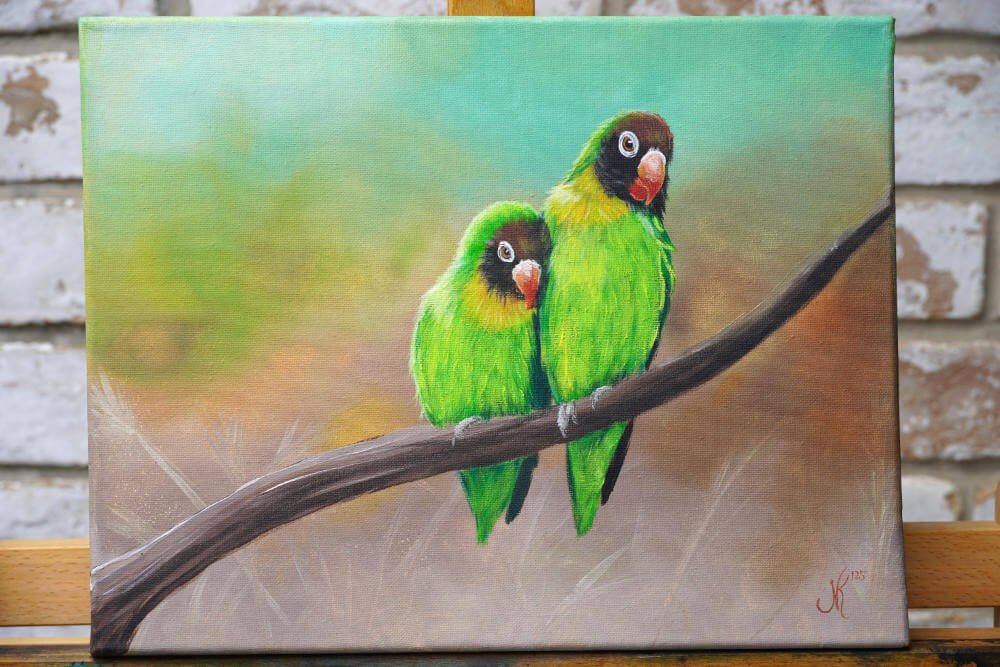
Meet the Black-Cheeked Lovebirds
Have you ever wondered where the term “lovebird” comes from? The name “lovebird ” originally referred to small parrots of the genus Agapornis. These birds were known to be highly monogamous and maintain long-term bonds. Now, they don’t necessarily mate for life, but these strong bonds inspired the romantic nickname. The Black-Cheeked Lovebird is one of nine species of lovebirds that are still around today. Due to habitat loss and water scarcity in its native Zambia, it is currently listed as vulnerable.
Scientific Name: Agapornis nigrigenis
Phylum: Chordata
Order: Psittaciformes
Genus: Agapornis
Kingdom: Animalia
Class: Aves
Family: Psittaculidae
Species: A. nigrigenis
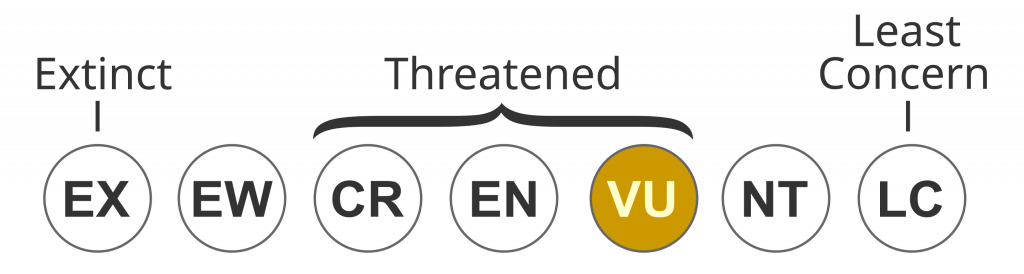
IUCN Redlist Status:
In the 2025 assessment of the black-cheeked lovebird, the IUCN listed this species as vulnerable. Their population is decreasing, with only 8,000 to 11,500 mature individuals left in the wild.
- Meet the Black-Cheeked Lovebirds
- Where they live
- What they look like
- What they eat
- Families and breeding
- What’s in a Name? “Inseparable” Around the World
- Black-Cheeked Lovebird Fun Facts
- Threats to their survival
- Conservation: keeping the love in the forest
- Buy Art & Save Wildlife
- Black-Cheeked Lovebird Factsheet
- Resources
- Shop Bestsellers
Where they live

Black-Cheeked lovebirds live in deciduous woodlands and rely heavily on access to permanent water. They are endemic to Zambia, more specifically south-west Zambia between the Kafue river and Zambezi river with roughly 6-20 fragmented sites. Historically, their range was broader with unconfirmed populations as far as Botswana, Zimbabwe, and Namibia. Black-cheeked lovebirds can live up to 3,230 feet above sea level. They do not migrate and generally remain within their home range year-round, though they may move depending on water availability. Like all parrots, black-cheeked lovebirds nest and forage on land, even though they are strong fliers and spend a good amount of time in trees.
What they look like
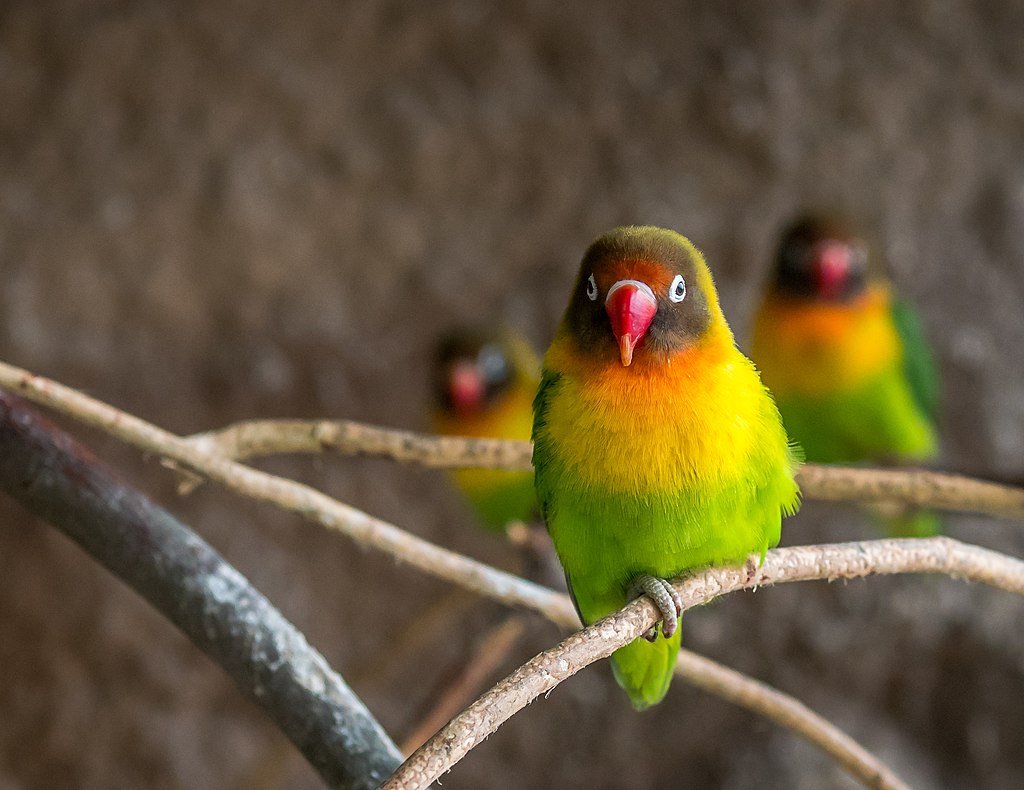
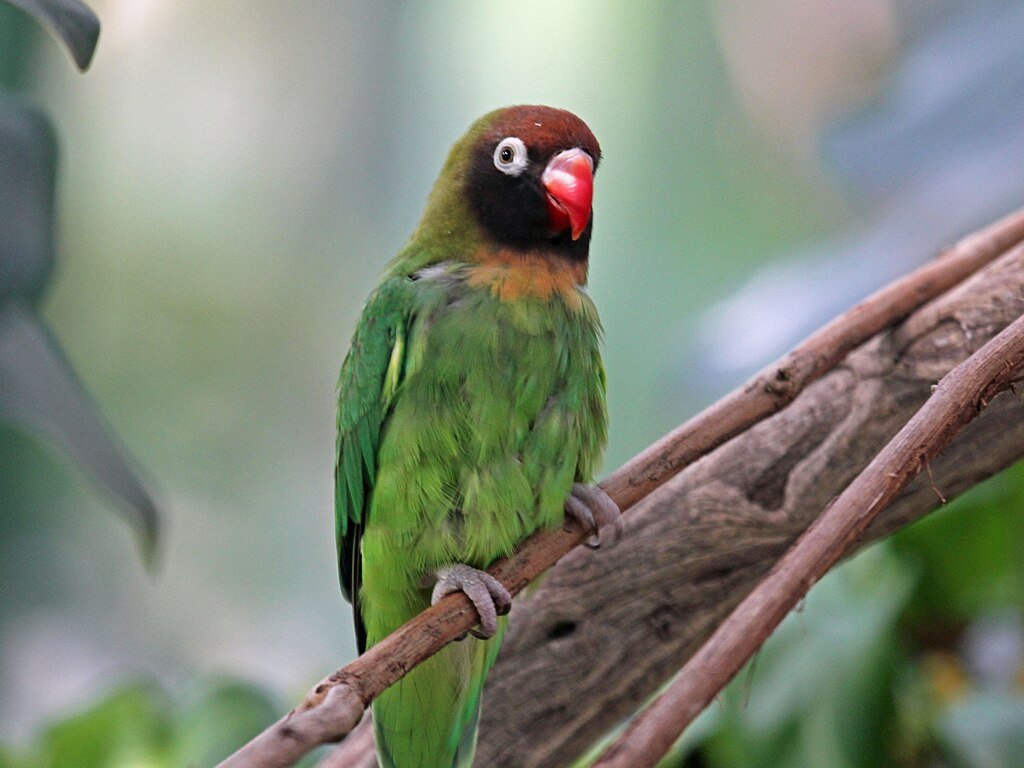
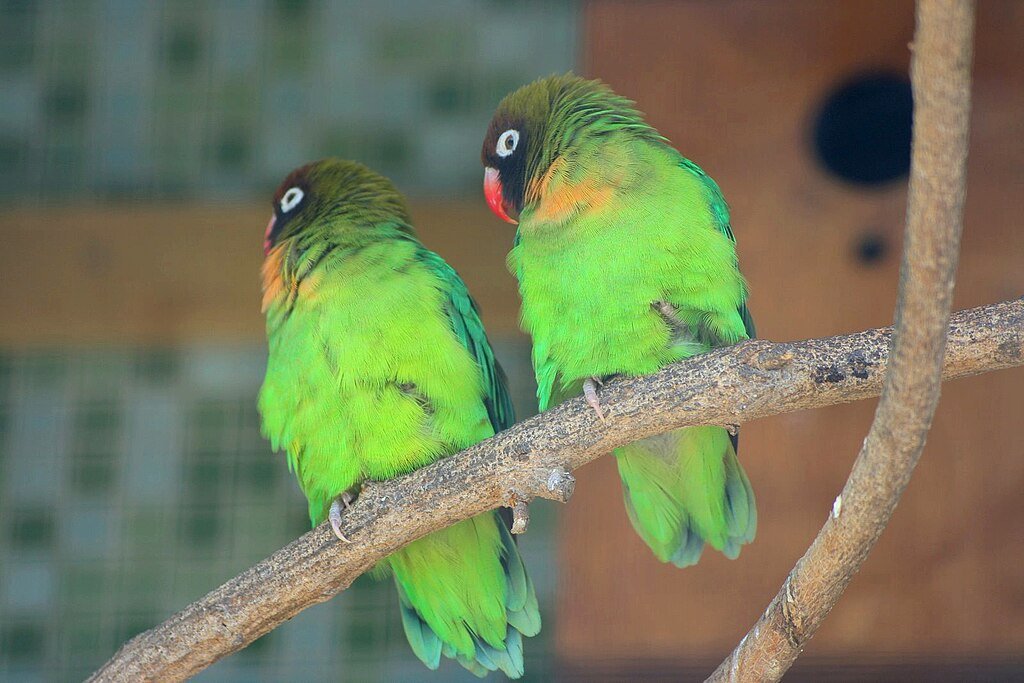
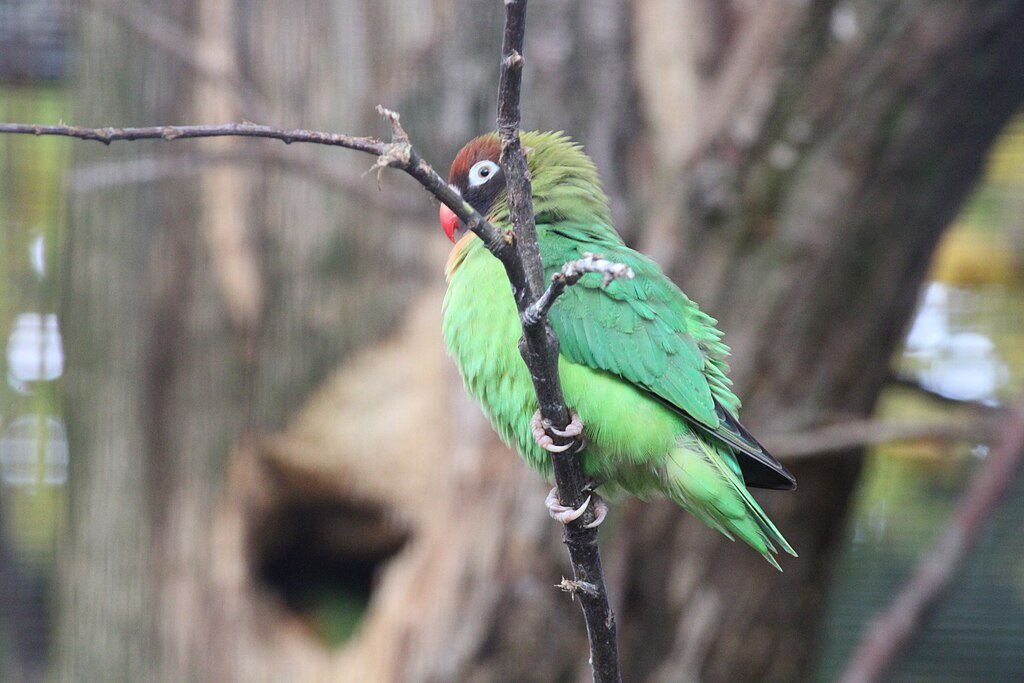
Black-Cheeked lovebirds are small parrots, measuring about 5.5 inches in length. Their body is mostly green with a brown head and and distinctive blackish-brown cheeks. Around their throat and chest they have an orange bib that fades into a yellowish-green. The parrots eyes are circled in white, and their feet are grey. While adults sport a bright red beak, juveniles tend to have a more orange bill.
What they eat
Black-Cheeked lovebirds are foragers that mainly feed on annual grass seeds. They will also eat millet, insect larvae, sorghum, and corn. Unlike other parrot species they need to drink water daily, as they are unable to obtain moisture from food.
Families and breeding
Black-cheeked lovebird generation length is 3.26 years. Typically they breed from November through December, the rainy season, when food and water are more available. They nest in natural tree cavities where the females will build a cone- or dome shaped nest, by weaving together strips of bark and plant material. The females then lay three to eight eggs. Egg incubation takes about 24 days and is primarily done by the female. After the chicks hatch, they remain in the nest for approximately 40-45 days before they fledge.
What’s in a Name? “Inseparable” Around the World
In many languages, lovebirds are literally called “inseparables”, reflecting their close pair bonds and social nature.
- French: Inséparable
- Spanish: Inseparable
- Portuguese: Inseparável
- Italian: Inseparabile
- German: Unzertrennliche (meaning “the inseparable ones”)
The scientific name Agapornis comes from Greek:
- Agape = love
- Ornis = bird
Together, it means “love bird.”
Black-Cheeked Lovebird Fun Facts
- Chirpy Cousins – Their calls are high-pitched and sharp, similar to other lovebird species, which can make them tricky to distinguish by sound alone in mixed flocks.
- Flock Power – Outside of breeding season, Black-cheeked Lovebirds can gather in large groups, sometimes numbering in the hundreds, especially near reliable water sources during the dry season.
- Social by Nature – These birds are highly social and usually seen in pairs or small flocks. Strong pair bonds are common, and individuals often perch close together and preen one another.
- Petite Parrots – Measuring only about 5–5.5 inches (13–14 cm) long, the Black-cheeked Lovebird is one of the smaller parrot species in Africa.
- Team Parenting – While the female incubates the eggs, the male brings her food.
- Name with Meaning – The word Agapornis comes from Greek, meaning “love bird,” referring to their strong pair bonds.
Threats to their survival
Black-cheeked Lovebirds face several threats within their limited range in southwestern Zambia.
Habitat Loss from Agriculture & Livestock – Expansion of livestock grazing and crop farming reduces native woodland and grassland habitat. Overgrazing can also degrade the grass species they depend on for seeds.
Logging & Woodland Degradation – Removal of mature trees reduces available nesting cavities, which are essential for breeding.
Drought & Climate Variability – Because they rely on daily access to water, prolonged droughts can significantly impact survival, especially during the dry season.
Disease – As with many bird species, outbreaks can spread quickly in flocking populations, particularly where birds congregate at shared water sources.
Hunting & Trapping – While not the primary threat, localized hunting and past trapping for the pet trade have contributed to declines.
Fishing Activities (Indirect Impact) – Human activity near key water sources, including fishing settlements, can disturb flocks and reduce access to reliable drinking areas.
Conservation: keeping the love in the forest
Protected Habitat – Black-cheeked Lovebirds occur within protected areas in southwestern Zambia, including national parks and game management areas, which help safeguard important woodland and water sources.
Research & Monitoring – Ongoing field research tracks population size, distribution, breeding success, and water dependence. Monitoring helps conservationists respond more effectively to drought and habitat changes.
Captive Breeding – Zoos and responsible avicultural programs maintain managed populations, helping preserve genetic diversity and increase awareness of this lesser-known species.
CITES Protection – The Black-cheeked Lovebird is listed under CITES Appendix II, meaning international trade is regulated. It is illegal to capture and export them without proper permits, helping reduce pressure from the pet trade.
How You Can Help
Learn & Share – One of the biggest challenges this species faces is low visibility. Unlike more famous lovebirds, the Black-cheeked Lovebird is not widely recognized. Sharing accurate information helps build awareness and support for conservation efforts.
Support Conservation Work – Organizations working in Zambia depend on public support to continue research, habitat protection, and education programs.
Shop with Purpose – When you shop at Artsefact, part of the proceeds go toward wildlife and habitat conservation: helping species like the Black-cheeked Lovebird and many others.
Buy Art & Save Wildlife
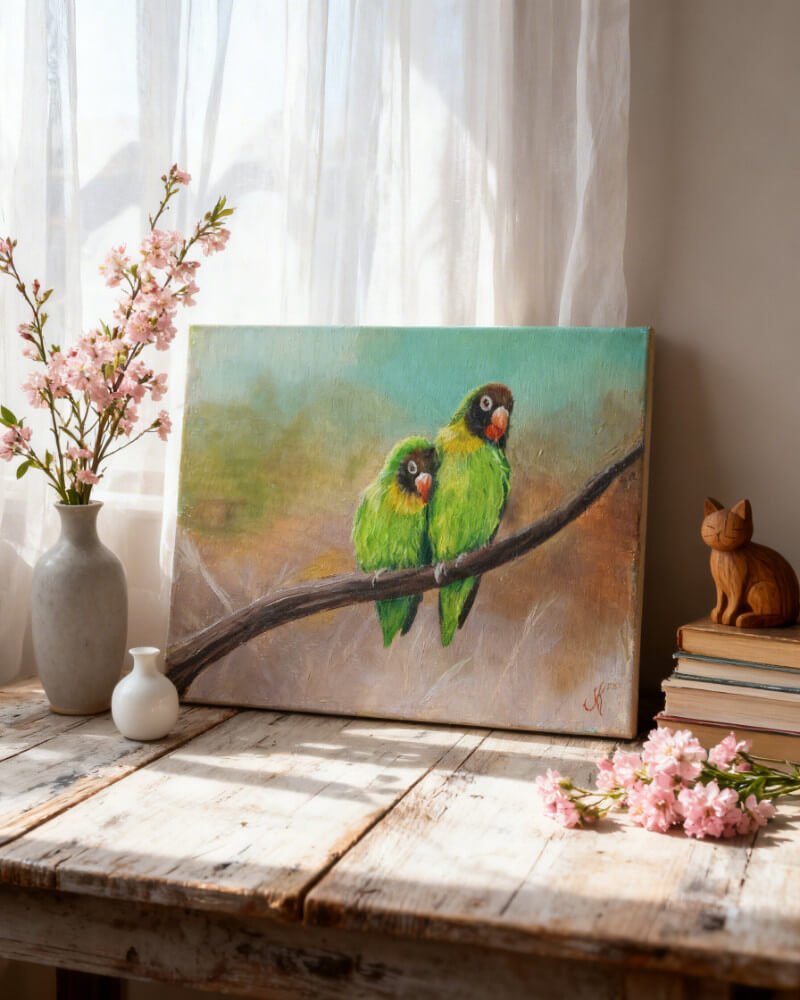
10% of all profits support wildlife and habitat conservation efforts, so every artwork you collect helps protect the planet.

Black-Cheeked Lovebird Factsheet
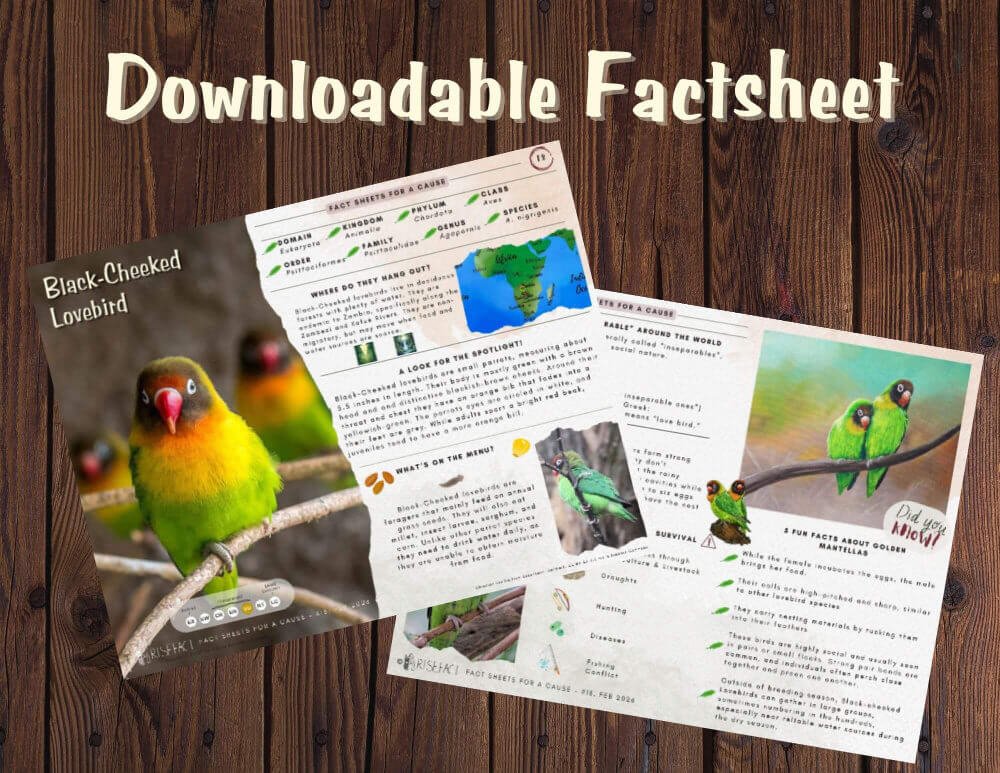
Would you like a Black-Cheeked Lovebird fact sheet?
- Sign up for our newsletter for exclusive updates and wildlife conservation tips (Your welcome email has your Password for the Portal)
- Visit https://artsefact.com/factsheets/ where you can access and download ALL Factsheets & Gain Early Access to NEW Factsheets
Here’s how you can gain access:
Resources
- IUCN Red List – https://www.iucnredlist.org/species/22685360/261154556#habitat-ecology
- Animalia – https://animalia.bio/black-cheeked-lovebird
- Cornell Lab – https://birdsoftheworld.org/bow/species/blclov1/cur/introduction
- CITES – https://cites.org/eng/app/index.php
- Lovebird Wikipedia Article – https://en.wikipedia.org/wiki/Lovebird
- Africn Bird Club – https://www.africanbirdclub.org/wp-content/uploads/2022/08/2021-Black-cheeked-Lovebird-Zambia-Chaona-Phiri.pdf
- The Parrot Society UK – https://theparrotsocietyuk.org/site/index.php/parrot-information/articles/articles-on-parrot-species/black-cheeked-lovebird/
- World Parrot Trust – https://parrots.org/news/africa/lovebird-conservation-update-education-nest-boxes-and-genetics/


