

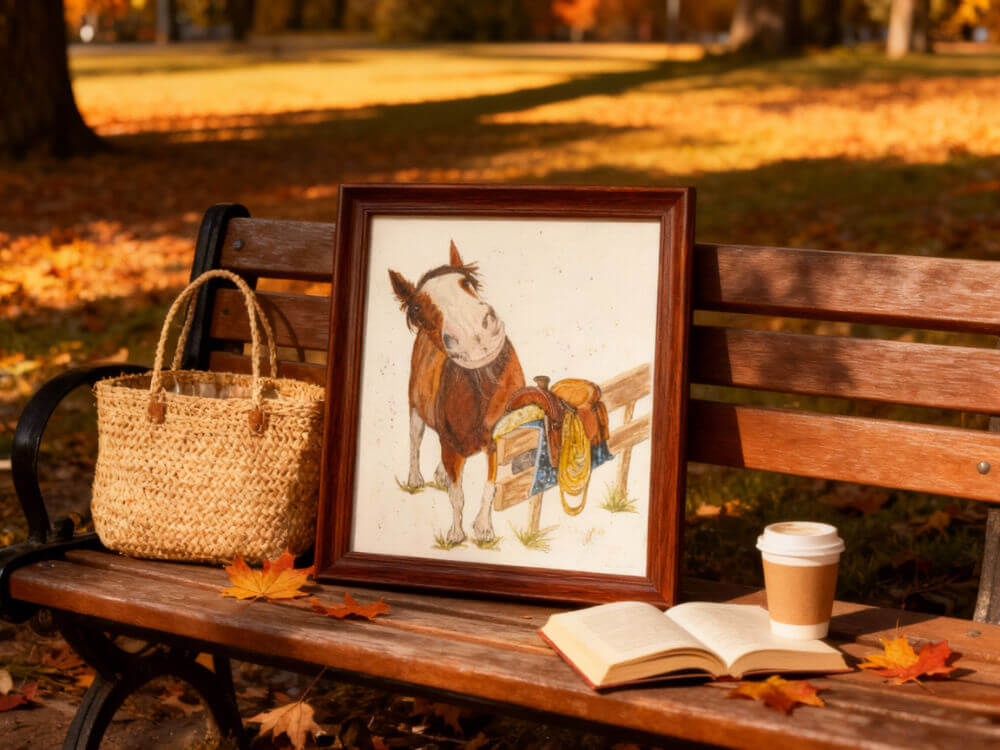
Meet the Clydesdale Horse
2026 is the Year of the Horse! A perfect moment to celebrate one of the most iconic equine breeds ever. With their towering stature, feathered legs, and calm, steady presence, Clydesdale horses are instantly recognizable. They have played major roles in farming, industry, culture, and even pop culture. But beneath their show-stopping looks lies a story of decline, revival, and ongoing stewardship by passionate breeders and fans worldwide.
Scientific Name: Equus Caballus
Phylum: Chordata
Order: Perissodactyla
Genus: Equus
Kingdom: Animalia
Class: Mammalia
Family: Equidae
Species: E.caballus
IUCN Redlist Status: N/A
Unlike wildlife listed on the IUCN Red List, domestic horse breeds aren’t evaluated there, but Clydesdales do appear on rare domestic breed conservation lists. They are classified as Threatened by The Livestock Conservancy and listed as At Risk/Vulnerable by the Rare Breeds Survival Trust and on DAD-IS. These statuses reflect fewer than 5,000 Clydesdale horses worldwide and less than 1,000 annual registrations in North America.
- Meet the Clydesdale Horse
- Where They Come From: A Scottish Heritage
- Built Like No Other: Size, Strength, and Signature Features
- Fueling a Gentle Giant: What Clydesdales Eat
- Strong Bonds: Family Life and Social Behavior
- From Workhorses to Cultural Icons
- Clydesdales Fun Facts
- Temperament: Why “Gentle Giant” Fits So Well
- Conservation Status: A Rare Breed That Still Needs Help
- How You Can Help Protect the Clydesdale
- Buy Art & Save Wildlife
- Clydesdale Factsheet
- Resources
- Shop Bestsellers
Where They Come From: A Scottish Heritage

The Clydesdale horse originated in the Clydesdale region of Scotland (now Lanarkshire) in the late 18th and early 19th centuries. Breeders aimed to produce a strong, heavy draft horse suited for hauling farm equipment, coal carts, and other heavy loads by crossing imported Flemish stallions with local mares. The first recorded use of the name “Clydesdale” in reference to the breed dates back to 1826.
Over time, the breed spread far beyond Scotland. In the late 19th and early 20th centuries, thousands were exported to North America, Australia, New Zealand, continental Europe, and South Africa. In many of these regions, Clydesdales became beloved work horses, carriage and parade horses, and cultural ambassadors of equine strength.
Built Like No Other: Size, Strength, and Signature Features
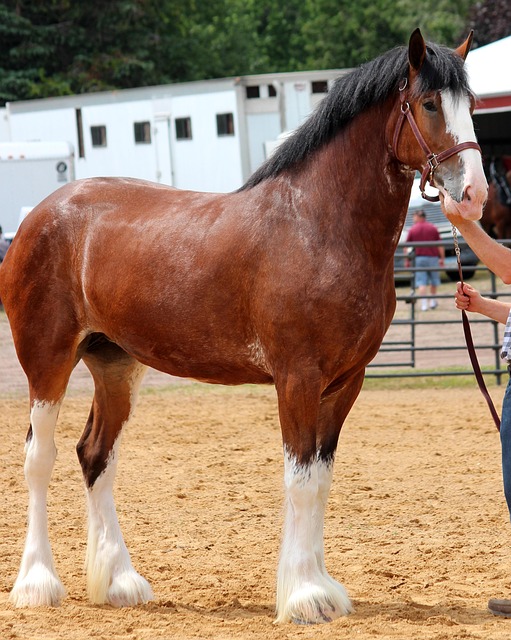
Clydesdales are among the largest horse breeds in the world, typically standing 16 to 18 hands high and weighing 1,600 to 2,400 pounds. Their size is matched by a well-balanced build: powerful shoulders, a deep chest, strong hindquarters, and sturdy legs capable of sustained pulling.
One of their most recognizable traits is the feathering: long, silky hair around the lower legs and hooves. While visually striking, feathering originally served a practical purpose, offering some protection against cold and wet working conditions. Their most common coloring is bay with white markings, though black, chestnut, roan, and grey also appear. Often, they have four white “stockings” on their legs and a well-defined blaze. However, solid colors or body spots can occur.
Despite their imposing size, Clydesdales are known for their gentle and cooperative nature. They tend to be intelligent, patient, and people-oriented, traits that make them ideal farm partners and, now, excellent ambassadors in public settings.
Fueling a Gentle Giant: What Clydesdales Eat
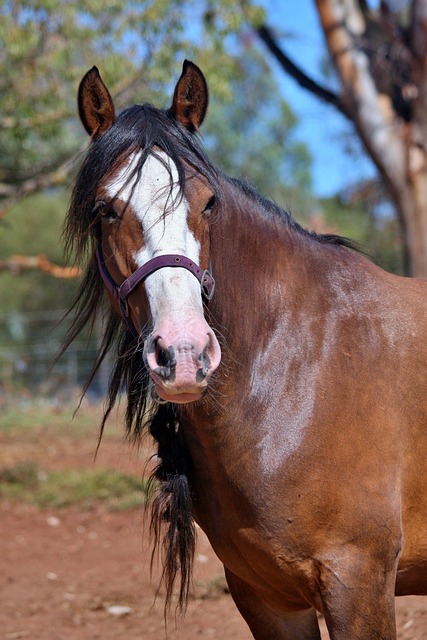
Clydesdales may be massive, but their diet is fairly simple: high-quality forage first, everything else second. As draft horses, they evolved to perform long, strength-based work, which means their digestive systems are designed to extract energy efficiently from fibrous plant material.
The core of a Clydesdale’s diet is grass and hay, which make up the majority of their daily intake. Because of their size, they consume significantly more forage than lighter horse breeds, often 30–50 pounds of hay per day, depending on activity level, age, and season. Access to clean, fresh water is critical, as large horses can drink 10–20 gallons daily, sometimes more in hot weather or during work.
When additional energy is needed, such as during growth, pregnancy, lactation, or heavy work, Clydesdales may receive supplemental feeds, such as grains or commercially balanced concentrates. However, careful management is important. Despite their size, Clydesdales can be prone to metabolic issues, joint stress, and excess weight if overfed rich diets.
Minerals and vitamins are also important, especially calcium, phosphorus, copper, zinc, and selenium, which support bone strength, hoof health, and muscle function. Because feathered legs and large hooves can be sensitive to moisture and imbalance, proper nutrition plays a direct role in preventing hoof problems and skin conditions.
In short, a healthy Clydesdale diet is about quality, balance, and consistency.
Strong Bonds: Family Life and Social Behavior
Clydesdales are naturally social, herd-oriented animals, shaped by centuries of working closely with both humans and other horses. In natural and managed herd settings, they form stable social groups where bonds are reinforced through mutual grooming, shared resting areas, and calm, consistent interaction.
Mares typically give birth to a single foal after an 11-month pregnancy. However, Clydesdales are known to successfully carry twins, as well! Clydesdale foals are surprisingly large at birth and often weigh over 100 pounds, yet they’re quick to stand and nurse within hours. Early bonding between mare and foal is strong, with mothers providing protection, guidance, and steady reassurance during the foal’s first months of life.
Young Clydesdales learn social cues and appropriate behavior by observing older horses. In mixed-age herds, experienced adults often act as quiet leaders, helping maintain harmony. Stallions, when present, can be protective but are generally calm if properly managed, reflecting the breed’s long history of selection for steady temperament.
Because of their cooperative nature, Clydesdales often adapt well to structured family groups, breeding programs, and even multi-horse working teams. Their ability to form lasting bonds with other horses and people is one of the reasons they’ve remained such trusted partners throughout history.
From Workhorses to Cultural Icons
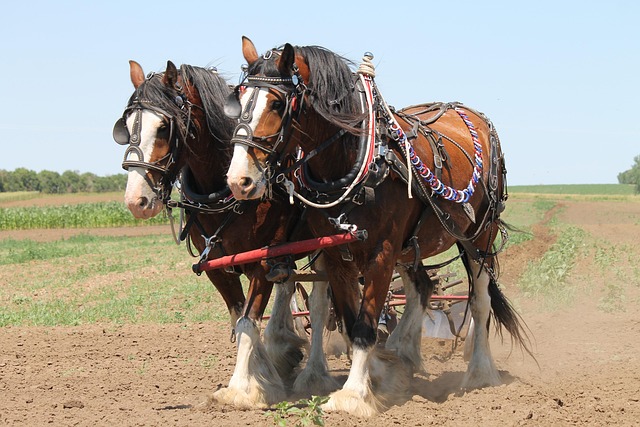
For centuries, Clydesdales were the backbone of agriculture and industry. They plowed fields, hauled timber and coal, and pulled wagons through cities long before tractors and trucks took over. Their strength, stamina, and calm nature made them indispensable partners in daily life across Scotland and far beyond. However, as mechanization spread in the early 20th century, demand for draft horses collapsed almost overnight. Tractors replaced teams in the fields, trucks replaced wagons on the roads, and Clydesdale numbers fell sharply. By the mid-1900s, what was once a common working horse had become increasingly rare.
Yet Clydesdales didn’t disappear; they transformed.
One of the most influential chapters in their modern story began with Budweiser. Starting in the 1930s, Budweiser’s iconic Clydesdale teams became a symbol of celebration, tradition, and craftsmanship. Their appearances in parades, public events, and especially Super Bowl commercials introduced generations of people to the breed. For many, those slow-motion hoofbeats and gleaming harnesses were their first encounter with a Clydesdale.
Behind the scenes, Budweiser operates a carefully managed breeding and training program, maintaining multiple farms across the United States. Only horses that meet strict standards for size, temperament, color, and movement are selected for the teams. While the program is best known for its public-facing role, it has also played a quiet part in maintaining breed visibility and supporting long-term interest in Clydesdales at a time when working roles had vanished.
Today, Clydesdales continue to shine in parades, agricultural shows, heritage festivals, therapy programs, and educational outreach. They serve as living ambassadors by connecting modern audiences to a time when horses powered daily life and reminding us that some legacies are worth carrying forward, one steady step at a time.
Clydesdales Fun Facts
- Worldwide Wanderers – Although Scottish in origin, Clydesdales helped shape farming and transport systems across North America, Australia, and New Zealand.
- Living History – Every Clydesdale alive today carries genetic links to horses that powered agriculture before engines existed.
- Hoof Goals – A single Clydesdale hoof can be bigger than a dinner plate, and its shoes can weigh several pounds each.
- Feather Care Is a Thing – That beautiful leg feathering needs regular cleaning and drying; otherwise, it can trap moisture, leading to skin issues like scratches or mites.
- Heritage DNA – Many modern Clydesdales can trace their lineage back through studbooks dating back over 150 years.
Temperament: Why “Gentle Giant” Fits So Well
One of the Clydesdale’s greatest strengths isn’t physical; it’s their behavior. Despite their size, they are widely known for being calm, steady, and forgiving. Historically, this made them safe to use in crowded cities and alongside inexperienced handlers. Today, they make excellent candidates for therapy, educational programs, and public events.
Their temperament is also part of why preservation matters. These horses represent a type of human-animal partnership that shaped centuries of rural life, where trust, cooperation, and patience were just as important as power.
Conservation Status: A Rare Breed That Still Needs Help
Because Clydesdales are a domestic breed, they are not evaluated by the IUCN Red List. Instead, their status is tracked through agricultural and heritage-breed conservation systems.
- DAD-IS (FAO Domestic Animal Diversity Information System) lists the Clydesdale as at risk due to declining population trends and limited breeding numbers in many countries.
- The Livestock Conservancy classifies the breed as Threatened, indicating fewer than 5,000 animals worldwide and limited annual registrations.
- Rare Breeds Survival Trust (UK) also lists the Clydesdale as At Risk.
These classifications reflect real challenges: small breeding populations, high care costs, limited genetic diversity, and fewer people able to keep large draft horses. While dedicated breeders have stabilized numbers in some regions, the breed remains vulnerable without continued support.
How You Can Help Protect the Clydesdale
- Support rare-breed organizations working to preserve draft horses and other heritage livestock.
- Attend agricultural shows and heritage events to learn directly from breeders and handlers.
- Share accurate information about rare breeds (awareness builds interest, and interest builds support!)
- Value living history: conservation isn’t only about wildlife; it’s also about safeguarding domesticated biodiversity shaped over centuries.
- Lastly, Shop at Artsefact: Part of the proceeds go towards wildlife and habitat conservation.
Buy Art & Save Wildlife
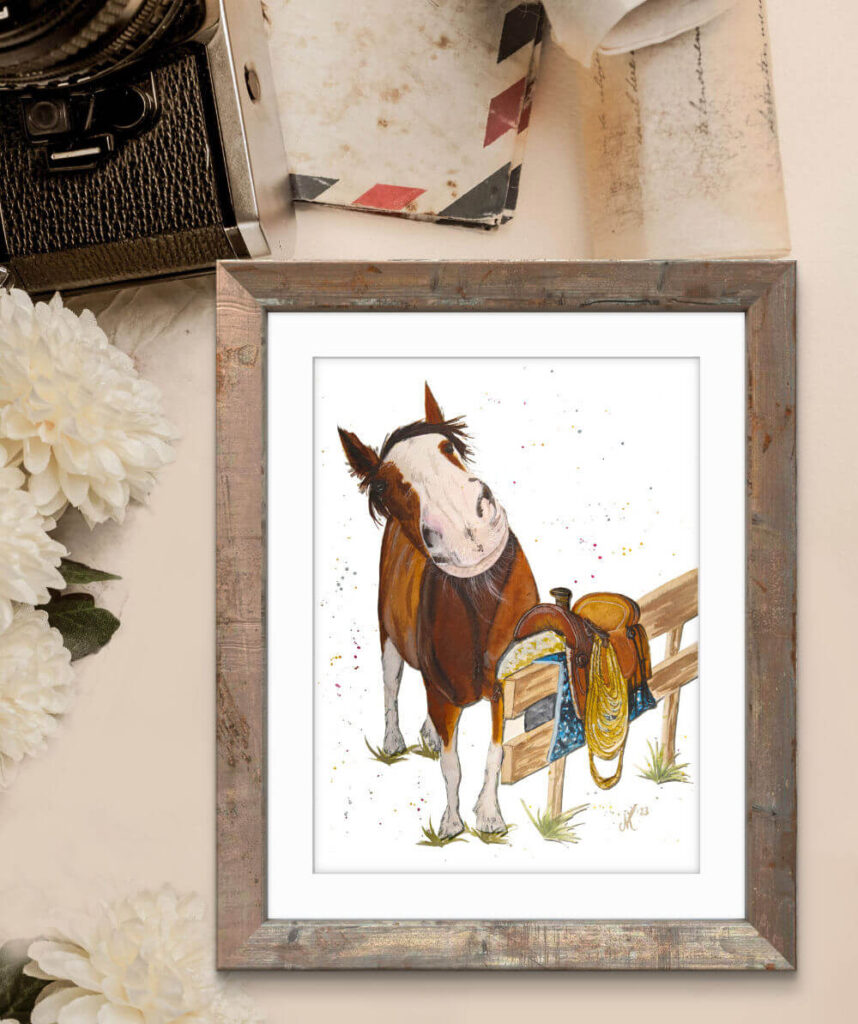
10% of all profits support wildlife and habitat conservation efforts, so every artwork you collect helps protect the planet.


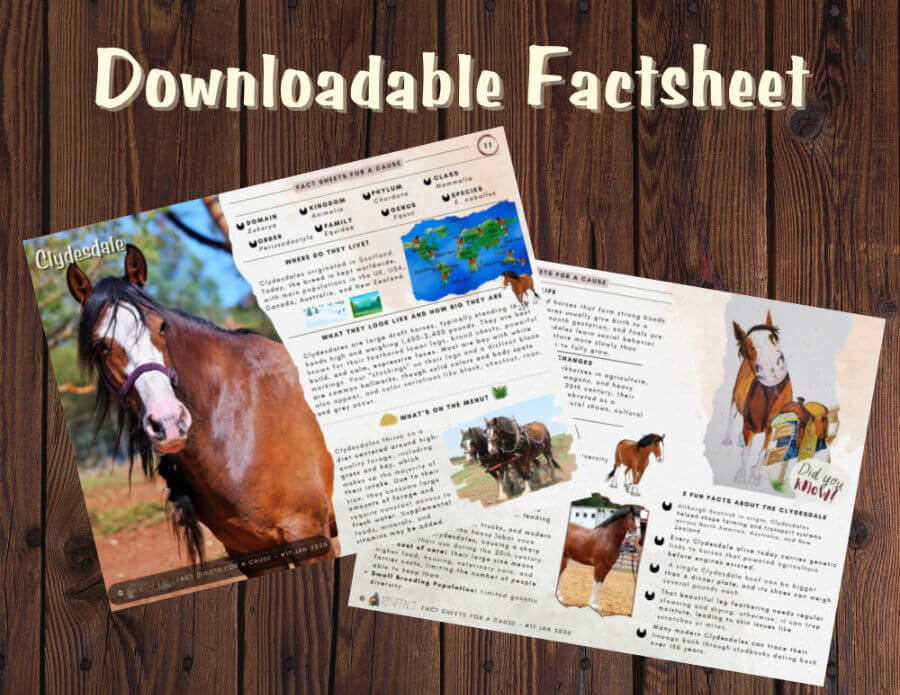
Clydesdale Factsheet
Would you like a Polar Bear fact sheet?
- Sign up for our newsletter for exclusive updates and wildlife conservation tips (Your welcome email has your Password for the Portal)
- Visit https://artsefact.com/factsheets/ where you can access and download ALL Factsheets & Gain Early Access to NEW Factsheets
Here’s how you can gain access:
Resources
- Rare Breeds Survival Trust – https://www.rbst.org.uk/clydesdale-horse
- Food and Agriculture Organization – https://www.fao.org/fileadmin/templates/library/docs/Hist_brit_ag.pdf and https://www.fao.org/4/i1034e/i1034e04.pdf
- Mad Barn – https://madbarn.com/clydesdale-horse-breed-profile/?srsltid=AfmBOornZfWHhgOGj1pr1DK2NjKneHpkmOr7c9Cxd-KAjxnTwbnB5k-X
- Seaworld – https://seaworld.org/animals/all-about/clydesdale/
- The Livestock Conservancy –https://livestockconservancy.org/ and https://livestockconservancy.org/clydesdale-horse/


