

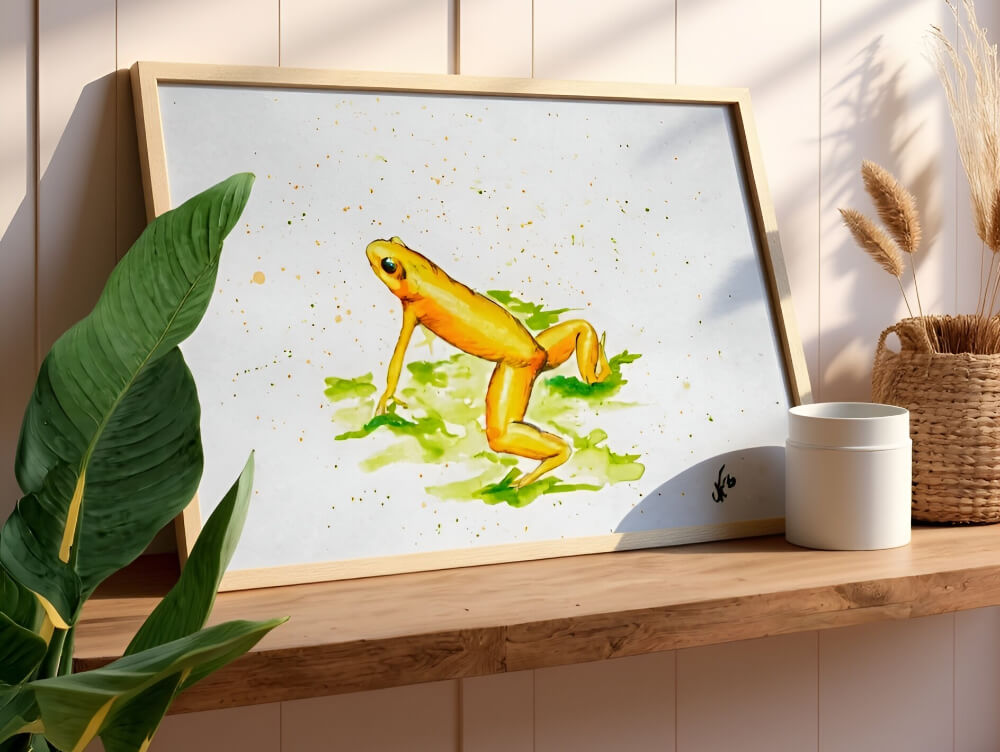
Meet the Golden Mantella Frog
Adorned in brilliant hues of yellow, orange, and red, these miniature frogs live exclusively in Madagascar. Their survival is at risk as forests give way to human expansion. But you can make a difference for these golden treasures.
Scientific Name: Mantella aurantiaca
Phylum: Chordata
Order: Anura
Genus: Mantella
Kingdom: Animalia
Class: Amphibia
Family: Mentellidae
Species: M. aurantiaca
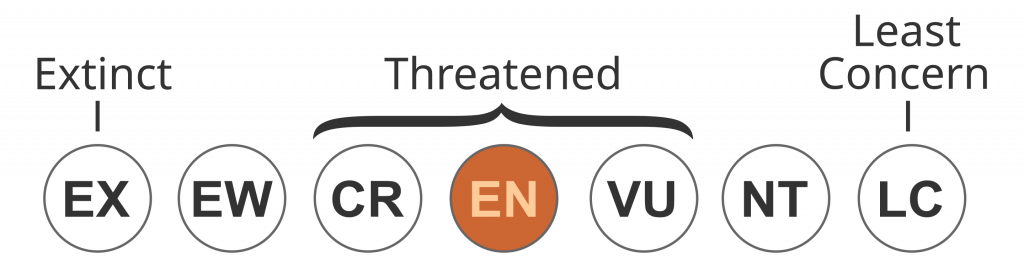
IUCN Redlist Status:
The Golden Mantella Frog is listed as Endangered on the IUCN Red List. It is critically endangered because its area occupancy is estimated to be less than 10 square kilometers, it is severely fragmented, and its habitat is declining.
The Golden Life
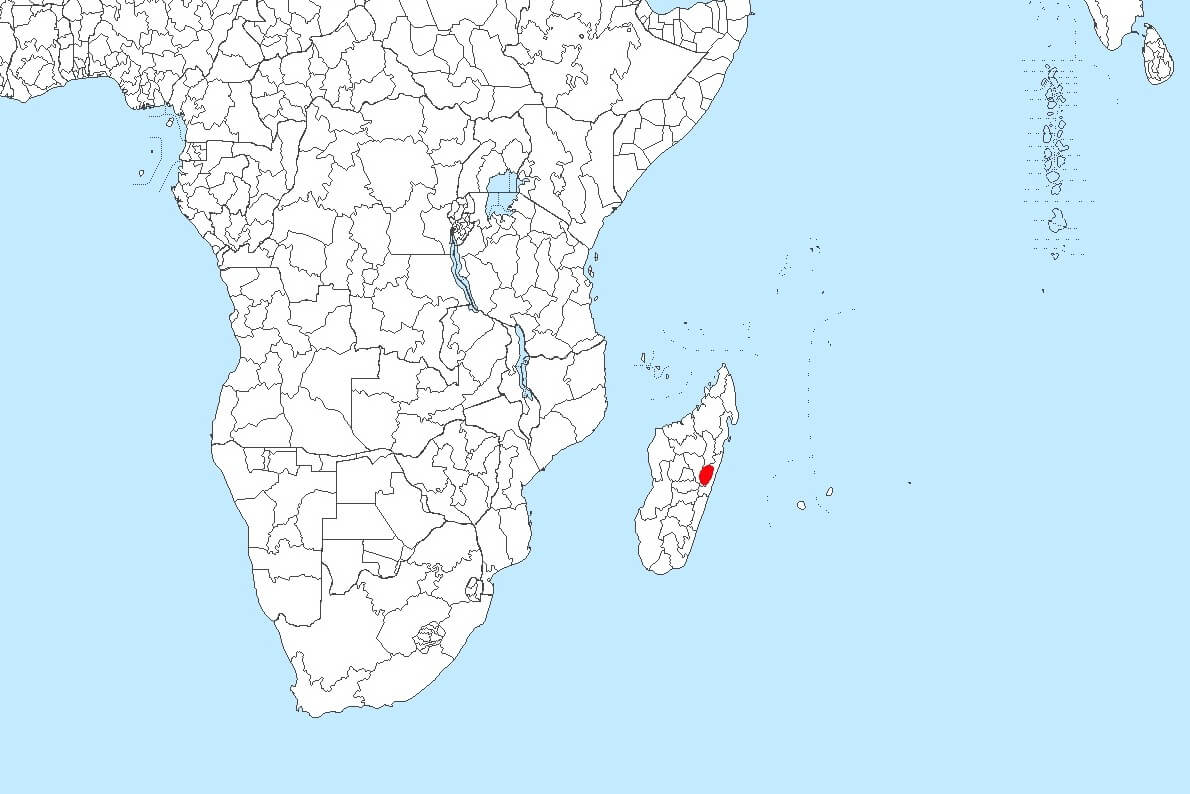
Golden Mantella frogs are only found in Madagascar. The distributions of these frogs are limited to Mormanaga – Beparasay and Amboihabany communes, Torotorofotsy Wetland, and Ambakoana. They are largely inactive during the winter months and are active during the summer. The average lifespan is eight years.
Gold Hues and Feasts
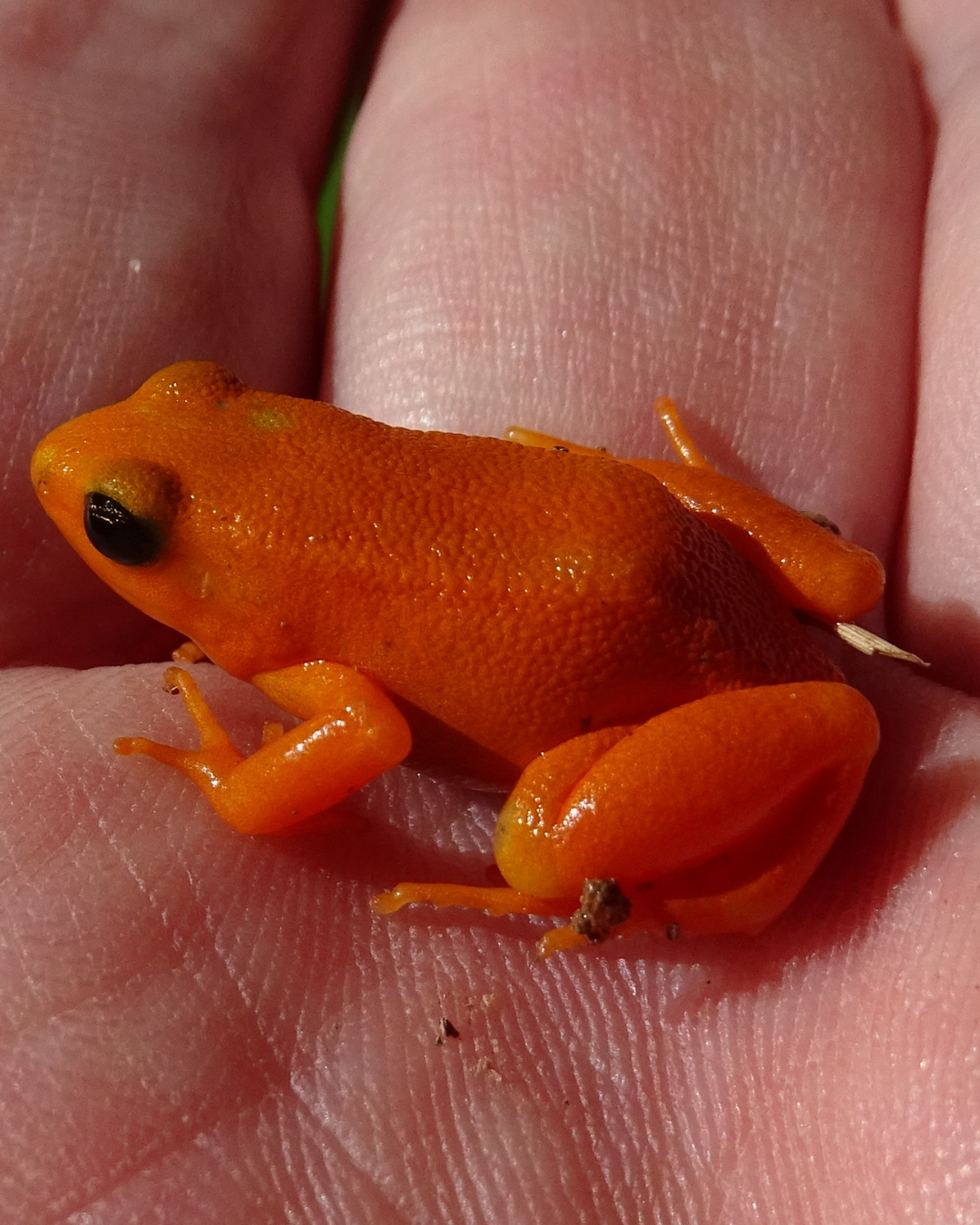
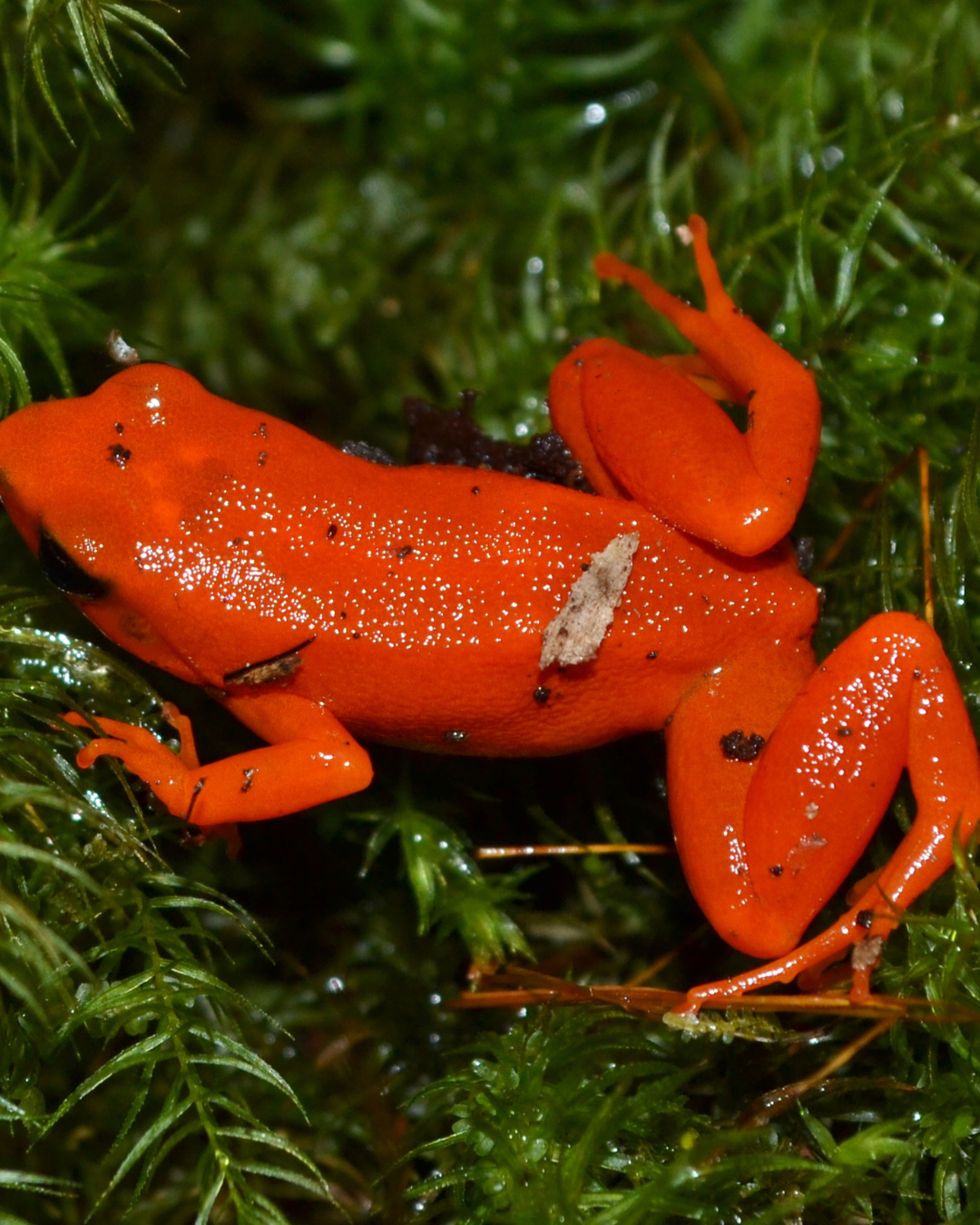
Despite being named golden, they can be yellow, orange, or red, and the inner legs have splashes of red. They have short legs, and their fingers and toes have adhesive pads. Size range is 0.78 in to 1.02 in. Males are typically smaller than females. The bright color warns predators that it is poisonous. It’s like a neon sign screaming “Don’t eat me!”. Their skin absorbs water, helps them breathe, and regulates their body temperature. They are insectivorous, meaning they eat small invertebrates such as mites, ants, flies, and collembolans. Using their tongue, prey is captured.
Golden Family Dynamic
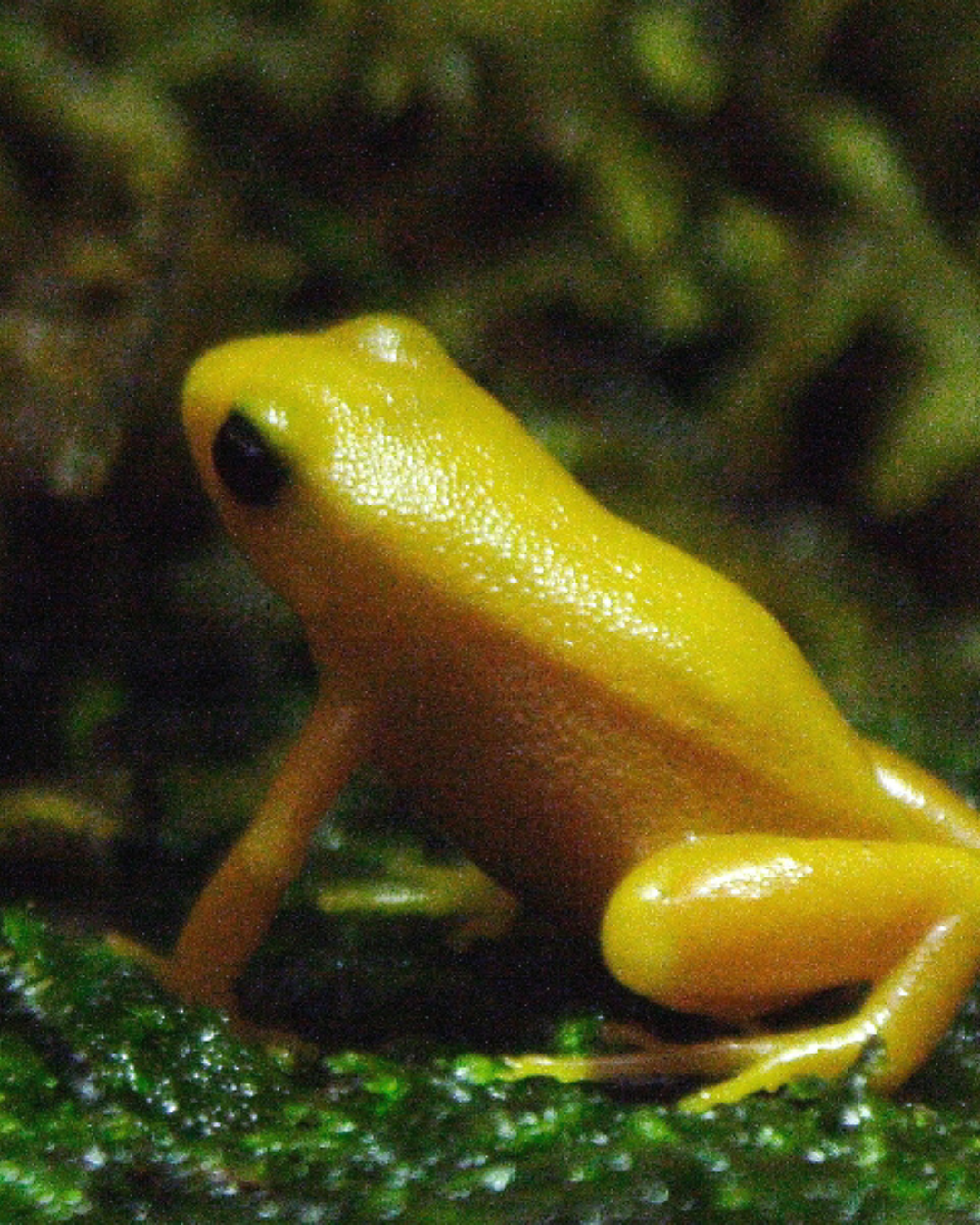
Golden Mantellas live in groups with more males than females. These frogs are territorial and will push away intruders. When the temperature warms and the rain comes, they breed. Males call out to females near water sources. The females lay the eggs on damp leaf litter near a water source. The males then proceed to fertilize the eggs. Each clutch contains 20 to 60 eggs. Two weeks later, the tadpoles hatch and get pushed into the water via rain. It takes 70 days for the tadpoles to become froglets.
Fun Nuggets of Knowledge
- Despite all their defenses, they are Madagascar’s most threatened amphibian.
- What’s fascinating is that their toxicity isn’t something they’re born with. Golden mantellas absorb toxins from the tiny invertebrates they eat, especially mites and ants that carry alkaloid compounds. Over time, these compounds build up in the frog’s skin, giving them their defensive punch. In captivity, where their diet is different, they lose that toxicity entirely.
- A group of mantellas is called an army, which sounds dramatic for frogs that could comfortably sit on your thumbnail. But the name fits their behavior: when several mantellas gather around the same breeding pools or feeding spots, their bright colors, quick movements, and coordinated scrambling can look like a miniature battalion on the rainforest floor.
- Unlike many of their Mantella cousins who belt out constant calls during breeding season, male golden mantellas are surprisingly quiet. Their calls are softer, less frequent, and often short bursts rather than long choruses. This low-key approach may help them stay hidden from predators while still communicating with nearby females.
- Golden mantella tadpoles look a bit different from many other amphibian babies. They don’t have external gills, instead relying on internal gill structures hidden beneath the skin. Their eyes sit right on top of their heads, giving them a wide “periscope” field of view. This helps them spot danger from above while they paddle around shallow pools and leaf-litter puddles in the rainforest.
Threats to their survival
While Habitat destruction by subsistence agriculture, timber extraction, fires, and expanding human settlement, and natural causes like droughts and chytridiomycosis are the leading causes of their decline in nature, the exotic pet trade is also a problem. These frogs are sought out due to their bright skin color.
Chytridiomycosis
The chytrid fungi Batrachochytrium dendrobatidis (Bd) and Batrachochytrium salamandrivorans (Bsal) cause chytridiomycosis. The fungus can cause sporadic deaths in some amphibian populations and 100% mortality in others. No effective measure is known for controlling the disease in the wild. The disease has been proposed as a contributing factor to a global decline in amphibian populations. Whether it is a new disease or an existing disease is unclear. The mechanism by which it is transmitted between animals is currently unknown. Clinical signs are as follows: anorexia, lethargic state, excessive shedding of skin, thickening of skin, reddening of the skin, and convulsions.
Conservation Efforts & How You Can Help
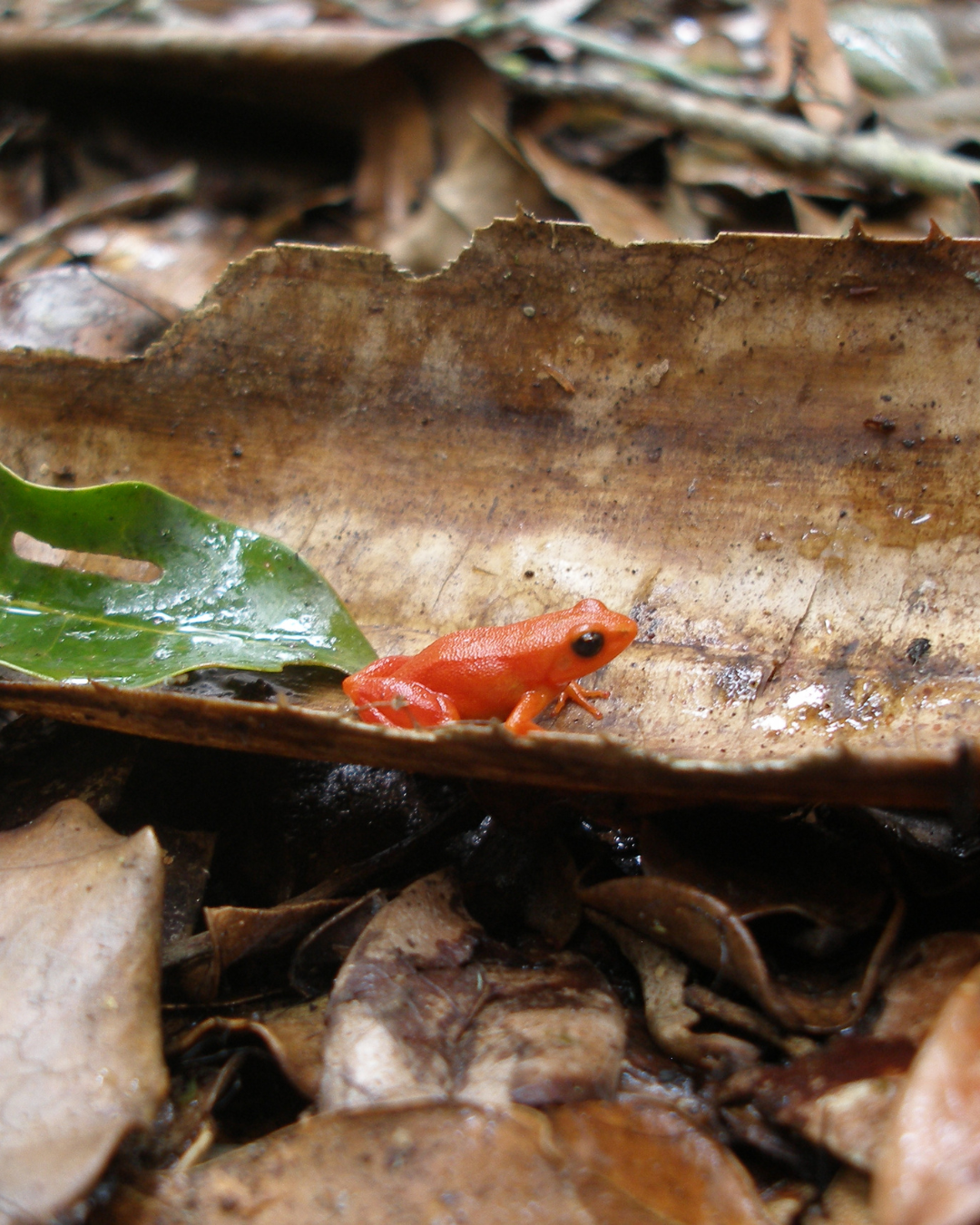
Not all hope is lost for these colorful, poisonous frogs. Plans are in place to launch a regulated pet collection program—the Chester Zoo and Madagasikara Vokajy partner to monitor wild populations. Follow the advice below to aid in the effort of saving the golden mantella frog and other endangered animals.
Shop for Pets Responsibly: Research breeders and quarantine newly owned frogs. If you keep amphibians, choose reputable breeders who test their animals for chytrid and follow strict hygiene practices. Always quarantine new arrivals for at least 30–60 days in a separate, easy-to-clean setup.
Never release pet frogs or tadpoles into the wild – Releasing captive animals can spread chytrid and other pathogens to native species. Surrender unwanted pets to reputable rescues or other hobbyists instead.
Avoid wild-caught amphibians – Purchasing wild-caught frogs can fuel habitat destruction, stress local populations, and increase the movement of diseases like chytrid. Choosing captive-bred animals supports ethical breeders and reduces pressure on fragile ecosystems.
Support conservation programs – Donate to or follow organizations working directly in Madagascar and worldwide to protect amphibian habitats, monitor wild populations, and fund disease research. Even small contributions help maintain field teams and local education programs.
Share Your Knowledge: Raising awareness is an excellent way for people to learn more about the lesser-known endangered animals.
Consume Less: Buy only what you need and shop second-hand when you can.
Lastly, Shop at Artsefact: Part of the proceeds go towards wildlife and habitat conservation.
Buy Art & Save Wildlife
10% of all profits support wildlife and habitat conservation efforts, so every artwork you collect helps protect the planet.
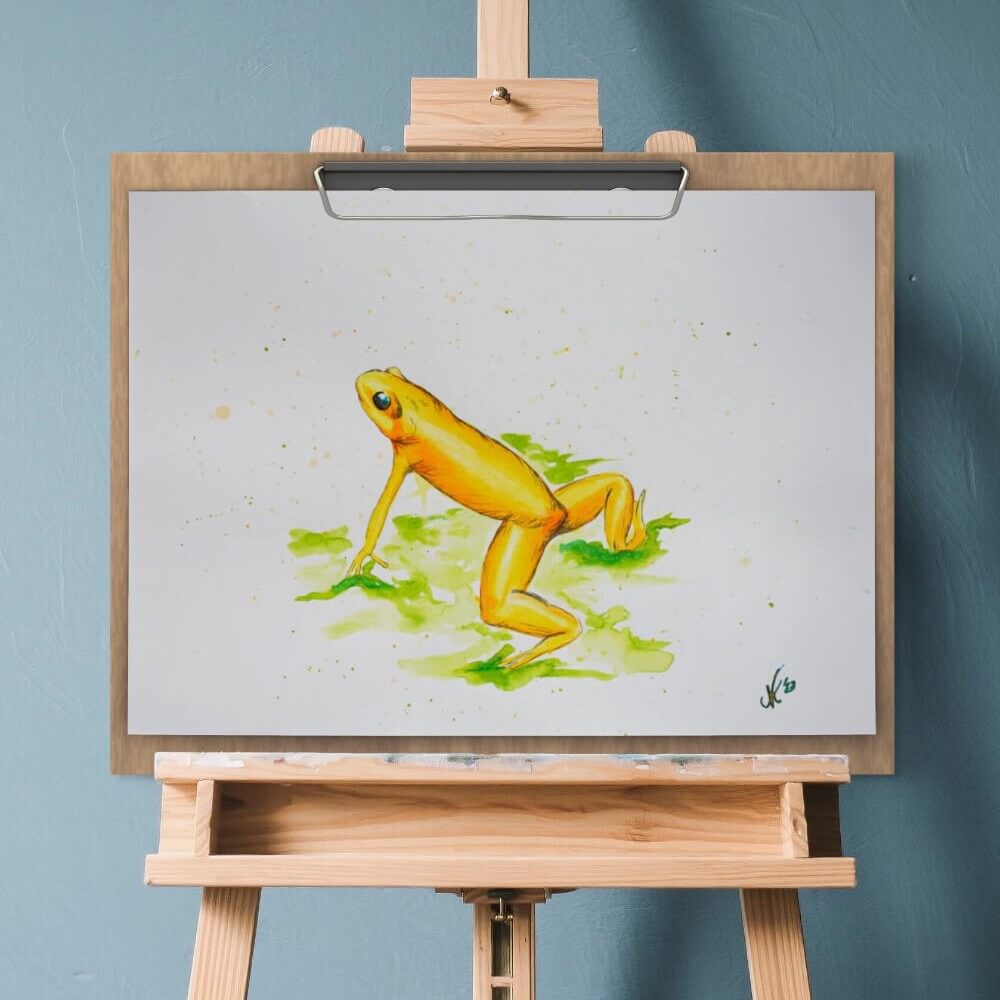

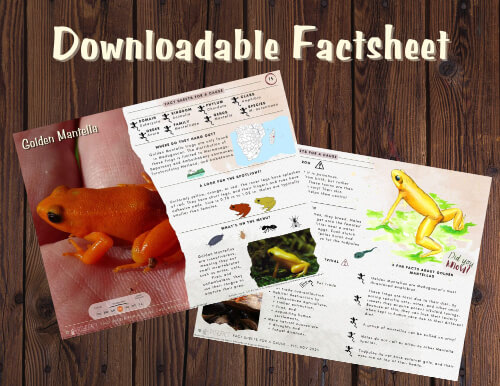
Golden Mantella Factsheet
Would you like a Golden Mantella fact sheet?
- Sign up for our newsletter for exclusive updates and wildlife conservation tips (Your welcome email has your Password for the Portal)
- Visit https://artsefact.com/factsheets/ where you can access and download ALL Factsheets & Gain Early Access to NEW Factsheets
Here’s how you can gain access:
Resources
- Wikipedia – https://en.wikipedia.org/wiki/Golden_mantella
- Smithsonian’s National Zoo and Conservation Biology Institute – https://nationalzoo.si.edu/animals/golden-mantella-frog
- Micke Grove Zoo – http://www.mgzoo.com/animals-conservation/Animals/GMantella.htm
- Chester Zoo – https://www.chesterzoo.org/animals/golden-mantella-frog
- Akron Zoo – https://www.akronzoo.org/amphibians/mantella-frog
- Sacramento Zoo – https://www.saczoo.org/golden-mantella
- Wikipedia – https://en.wikipedia.org/wiki/Chytridiomycosis
- Cornell University – https://cwhl.vet.cornell.edu/disease/chytridiomycosis#collapse27


