

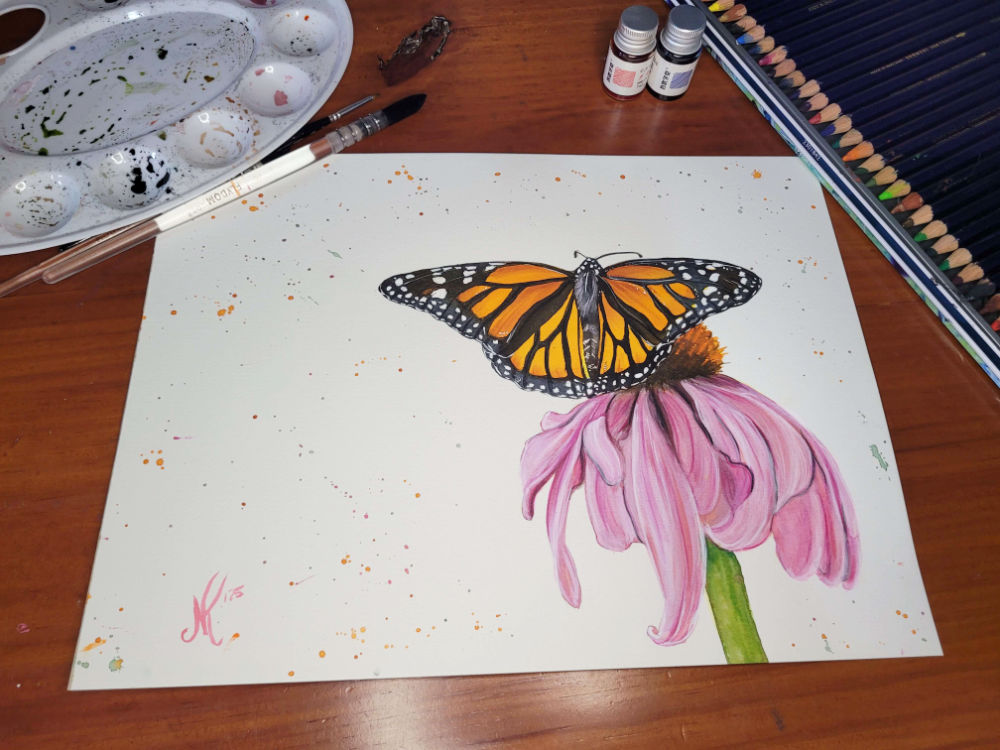
Meet the Monarch Butterfly
Although Mother’s Day is often associated with flowers, why not celebrate one of the creatures that helps them bloom? Enter the monarch butterfly. Known for its striking orange-and-black wings and its incredible migration spanning thousands of miles, this iconic pollinator plays a small but meaningful role in keeping our landscapes alive.
Scientific Name: Danaus plexippus plexippus
Phylum: Anthropoda
Order: Lepidoptera
Genus: Danaus
Kingdom: Animalia
Class: Insecta
Family: Nymphalidae
Species: D. plexippus plexippus
IUCN Redlist Status: Endangered
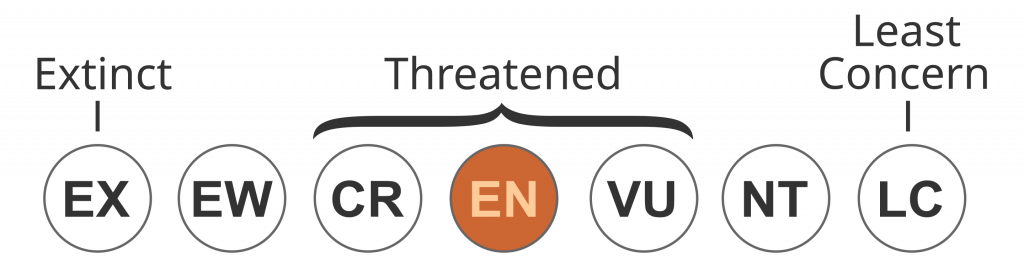
Following a 2021 assessment, the IUCN listed the Monarch butterfly as endangered. Their population is decreasing.
- Meet the Monarch Butterfly
- Where They Come From
- Beautiful stripes and spots
- Road trip food
- A Generation's Journey
- The Great Migration
- Monarch Fun Facts
- Monarch Lookalikes
- Little Guy, Big Challenges
- Good News
- How You Can Help Protect the Monarch Butterfly
- Buy Art & Save Wildlife
- Monarch Butterfly Factsheet
- Resources
- Shop Bestsellers
Where They Come From
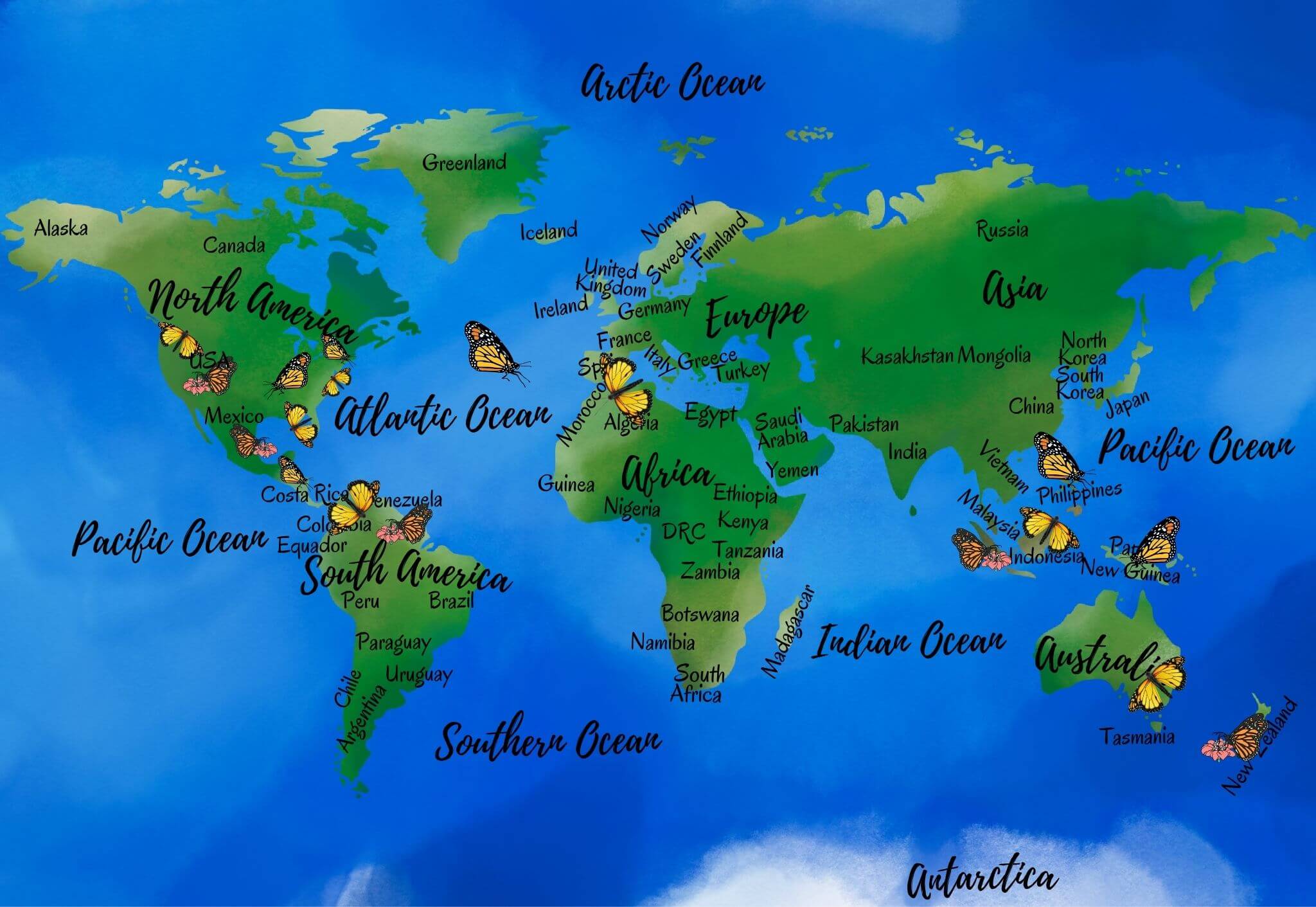
Monarch butterflies are found across much of the world, including Australia, New Zealand, South America, Central America, North America, Asia, and Europe, where they have been introduced. They are commonly found in gardens, meadows, grasslands, and prairies, and thrive in these open habitats, as long as they can find milkweed and nectar-rich flowers. These environments provide the essential resources monarchs need to feed, reproduce, and continue their remarkable life cycle.
Beautiful stripes and spots
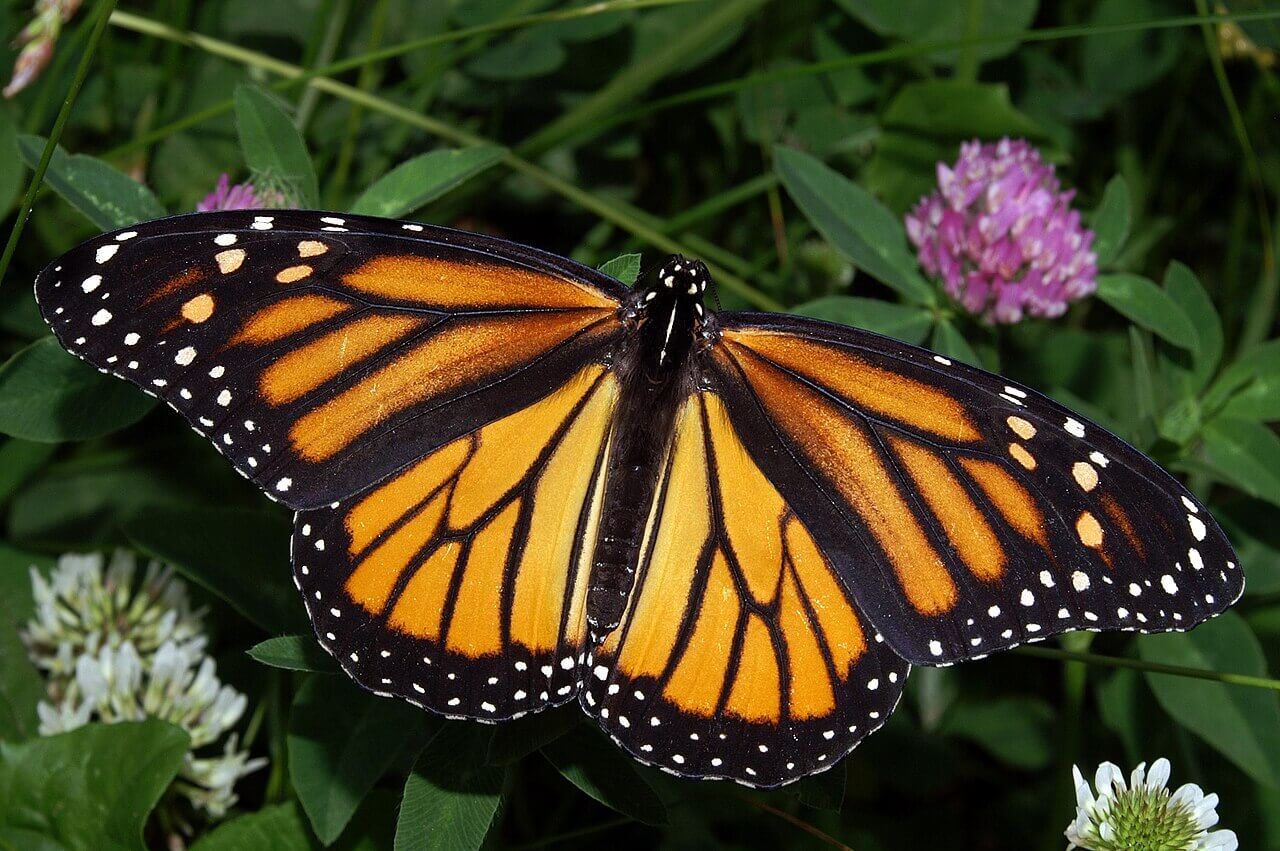
A monarch butterfly’s wingspan is about 3.7 to 4.1 inches, which makes it one of the larger butterflies found in North America. Its wings are vivid orange with black veins, two rows of white spots, and a black border. Females have thicker veins compared to their male counterparts, while males have slightly slimmer veins and a small black scent gland on each of their hindwings. Their bright coloring warns predators that they are toxic to consume. Despite their size, they are incredibly lightweight, weighing only a fraction of an ounce (0.0095 to 0.026 ounces). In their early stage, caterpillars have bright bands of white, black, and green-yellow. After several molts, the caterpillar grows to about two inches long before they finally begin to form their chrysalis.
Road trip food
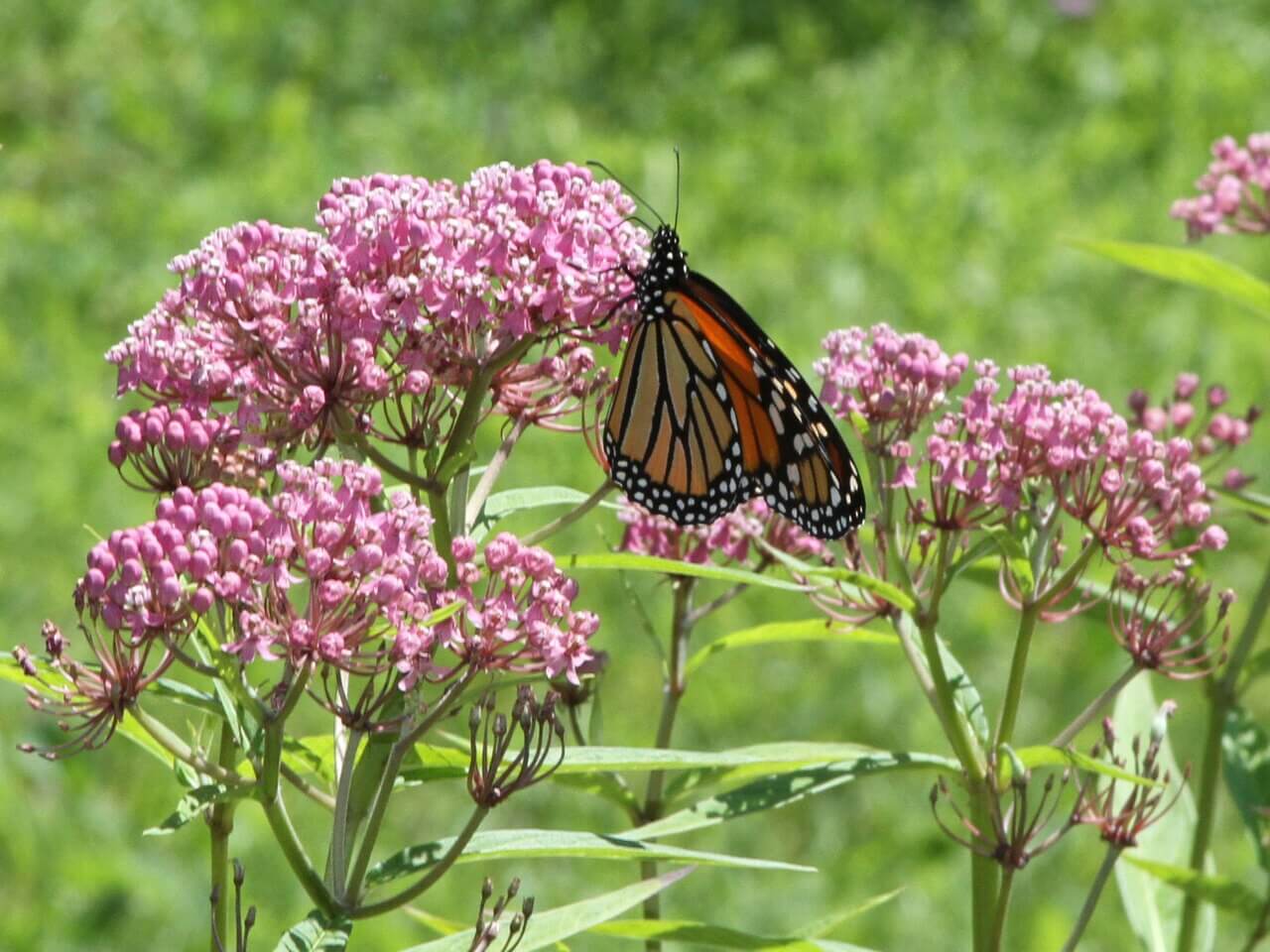
Caterpillars feed exclusively on milkweed, which gives them a chemical defense against predators. By eating milkweed, they store its toxic compounds that make both the caterpillar and the adult butterfly unappealing to predators. Once they reach adulthood, they shift their diet to nectar from flowers, specifically from milkweeds, clovers, and goldenrods. These nectar sources fuel their daily activity and support their long-distance migrations.
A Generation’s Journey
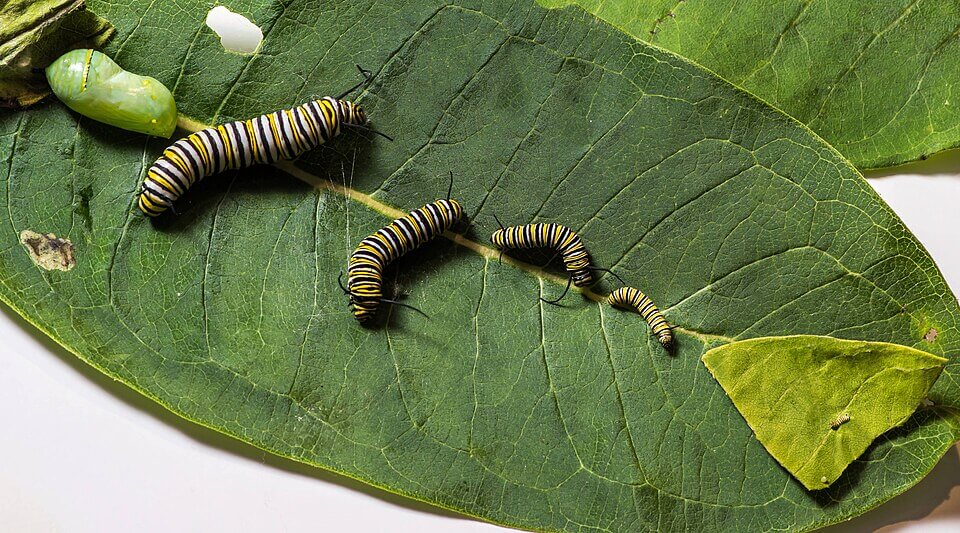
Monarch butterflies have one of the most fascinating life cycles in the insect world. Most generations live only about 2 to 6 weeks, but the final generation of the year, often called the “super generation”, can live up to 6 to 8 months as they migrate to overwintering sites.
At the end of winter, monarchs gather and mate in their overwintering regions in California and Mexico. After mating, females begin the journey north, laying their eggs on milkweed plants along the way. While males do not die immediately after mating, both sexes eventually die as the cycle continues into the next generation.
When the eggs hatch, tiny caterpillars emerge and spend about two weeks feeding on milkweed, growing rapidly before entering the next stage of their transformation.
After about two weeks of feeding and growth, the caterpillar enters the next stage of its life cycle, forming a chrysalis. It sheds its outer exoskeleton and transforms into a pupa, where its body is completely reorganized.
After 9 to 15 days, an adult butterfly emerges. This entire transformation, known as metamorphosis, typically takes about a month from egg to adult, depending on environmental conditions.
When the butterfly first emerges, its wings are soft and crumpled. It pumps fluid called hemolymph into them to expand their shape, then rests while they dry and harden. Only once its wings are fully formed can it take its first flight.
The Great Migration
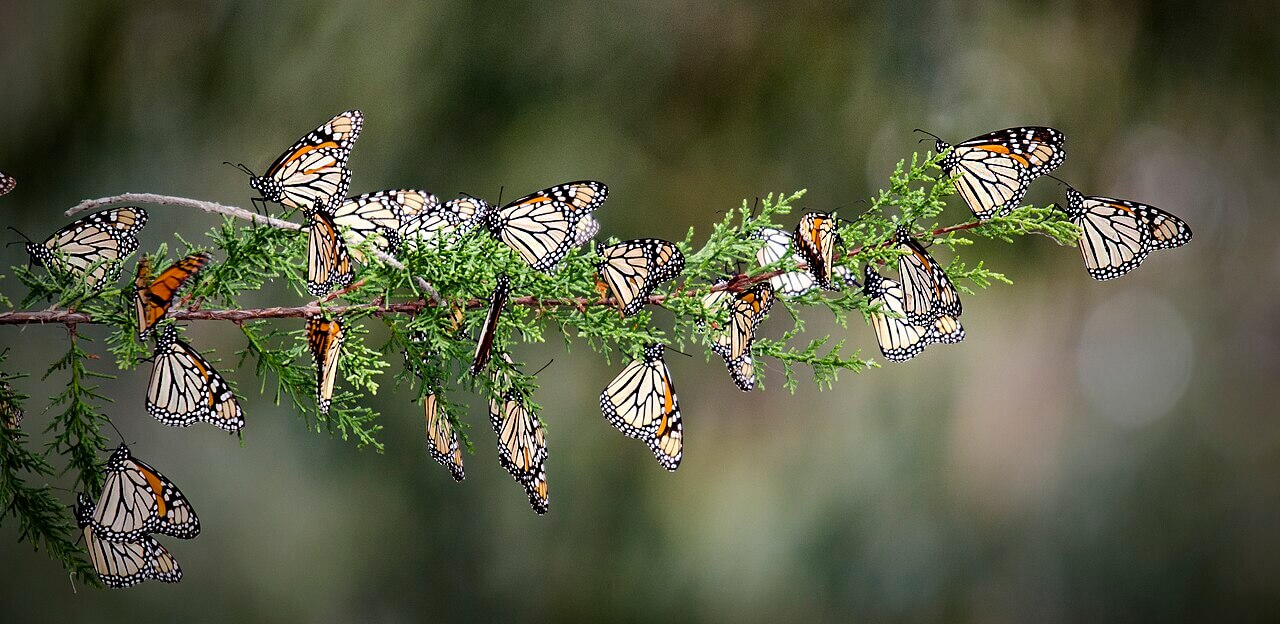
When Monarchs migrate, they can travel up to 2,500 miles. Some of them cover as much as 80 miles in a single day. Each fall, monarchs from the United States and Canada begin their journey south to their overwintering sites in central Mexico or Southern California. Only North American Monarchs migrate! And many of them return to the same forests year after year. Although there is no exact number of migrants, many estimate it to have historically been in the billions. Sadly, their populations have declined significantly over the past few decades. Only one special generation makes the full journey — a long-lived group that undertakes this incredible migration just once in its lifetime.
Monarch Fun Facts
- A group of monarchs is sometimes called a flutter
- Approximately four generations of monarchs occur every year, depending on climate and environmental conditions.
- Depending on where it is located, the size of the body and wings differ, as they are influenced by regional climate and migration patterns.
- They have internal compasses that help guide them even after getting knocked off course
- The scientific name is rooted in Greek mythology and often associated with sleep transformation.
- There are two different populations in North America: The eastern, which travels to central Mexico, and the western population, which overwinters along the coast of California
- Monarchs have been successfully bred on the International Space Station. Experiments have shown they can still orient themselves using light cues in microgravity.
Monarch Lookalikes
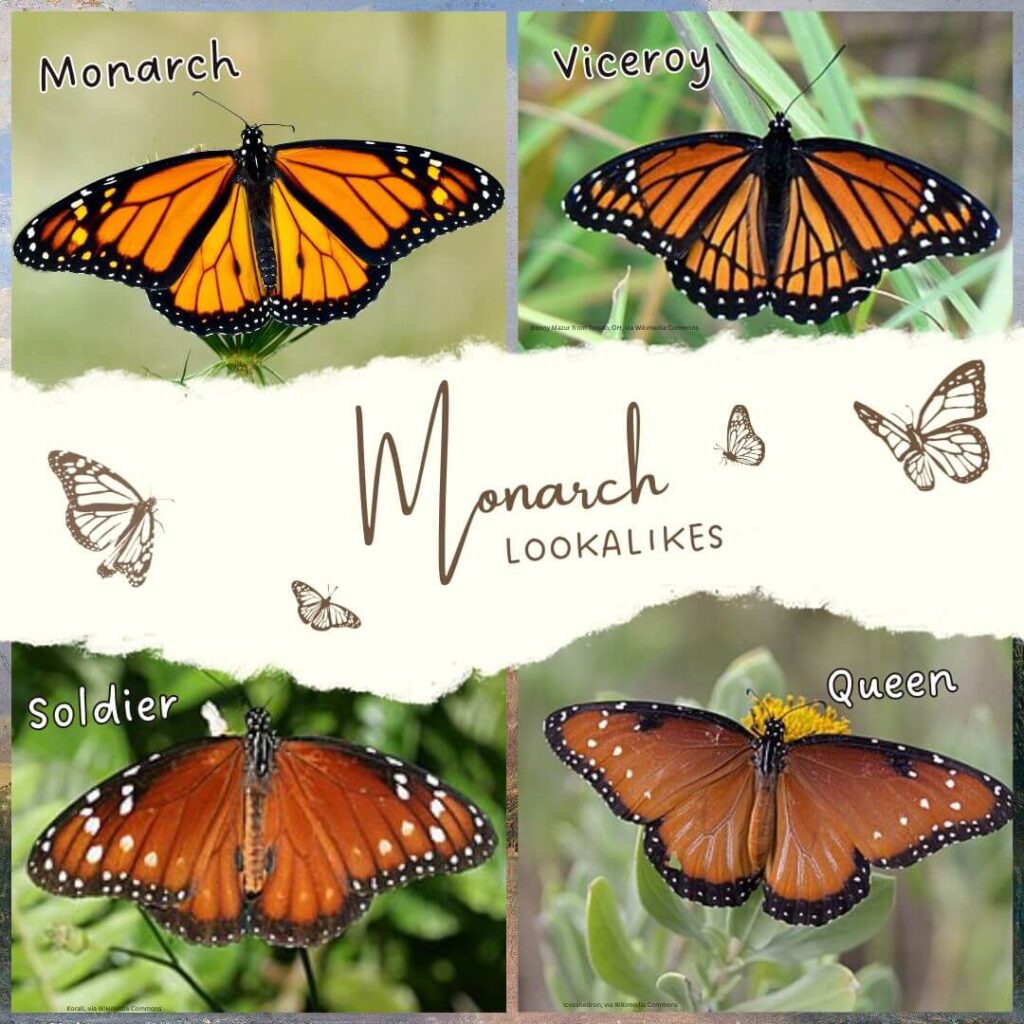
Monarch butterflies (Monarch butterfly) aren’t the only orange-and-black butterflies you might spot. Several species closely resemble them, often as a form of protection against predators.
Viceroy Butterfly
The Viceroy butterfly is the most well-known lookalike. At first glance, it appears nearly identical to a monarch, but there’s one key difference: a thin black line runs across its hindwings. Viceroys were once thought to mimic monarchs to avoid predators, but scientists now believe both species may be unpalatable, reinforcing each other’s warning signals.
Queen Butterfly
The Queen butterfly is a close relative of the monarch. It has a deeper, richer orange-brown color with white spots and lacks the bold black veins seen in monarchs. Like monarchs, queens are also toxic to predators.
Soldier Butterfly
The Soldier butterfly is another relative, found mostly in the southern United States and beyond. It has a darker, more reddish-orange tone and fewer distinct veins, giving it a softer, more uniform appearance.
Why So Many Lookalikes?
These similarities are no coincidence. Many of these butterflies share warning coloration, signaling to predators that they are toxic or unpleasant to eat. This form of mimicry helps reinforce the message: once a predator learns to avoid one, it’s more likely to avoid them all.
Quick ID Tip
If you spot a “monarch,” check the hindwings: a black line across them usually means you’ve found a viceroy instead.
Little Guy, Big Challenges
Habitat destruction, driven largely by agricultural expansion and land development, is the greatest threat to monarch butterflies. These changes have reduced the availability of milkweed and nectar-rich flowers along their migration routes. Pesticides used in farming further harm both the butterflies and the plants they rely on.
Extreme weather events, such as droughts and hurricanes, are becoming more disruptive along their migration paths. At the same time, climate change is shifting seasonal patterns, sometimes causing monarchs to begin their migration before milkweed has fully emerged, creating additional challenges for reproduction and survival.
Good News
Ongoing research and conservation efforts are helping protect monarch butterflies and their habitats. The Monarch Butterfly Biosphere Reserve in central Mexico safeguards critical overwintering forests, where logging is strictly regulated to protect the species.
New technologies, including lightweight tracking tags developed by Cellular Tracking Technologies, are allowing scientists to better understand monarch migration routes and behavior.
Conservation organizations like the World Wildlife Fund are working with farmers to reduce pesticide use and restore grasslands, creating healthier habitats for monarchs and other pollinators.
How You Can Help Protect the Monarch Butterfly
Keep Monarchs Wild
While monarch butterflies inspire many people to help, experts emphasize the importance of keeping them wild. Organizations like the Xerces Society advise against raising monarchs indoors or releasing captive-bred butterflies, as this can unintentionally spread disease and disrupt natural behaviors.
Instead, conservation efforts focus on protecting and restoring natural habitats. Planting native milkweed and nectar-rich flowers, reducing pesticide use, and preserving open spaces all help support monarch populations in a way that aligns with their natural life cycle.
By creating healthy outdoor environments rather than intervening directly, people can play a meaningful role in ensuring monarchs continue their remarkable migration for generations to come.
- Planting milkweed around your house so that the monarchs can lay eggs.
- Become a citizen scientist and help scientists track and collect data on them.
- Educate others by sharing what you’ve learned and encouraging pollinator-friendly practices in your community.
- Grow nectar-rich flowers like goldenrod, coneflowers, and asters to support migrating adults.
- Avoid pesticides and herbicides, which can harm both monarchs and the plants they depend on.
- Create a pollinator-friendly space by letting parts of your yard grow naturally and providing shelter from wind.
- Support habitat restoration efforts by donating to or volunteering with conservation organizations.
- Lastly, Shop at Artsefact: Part of the proceeds go towards wildlife and habitat conservation.
Buy Art & Save Wildlife
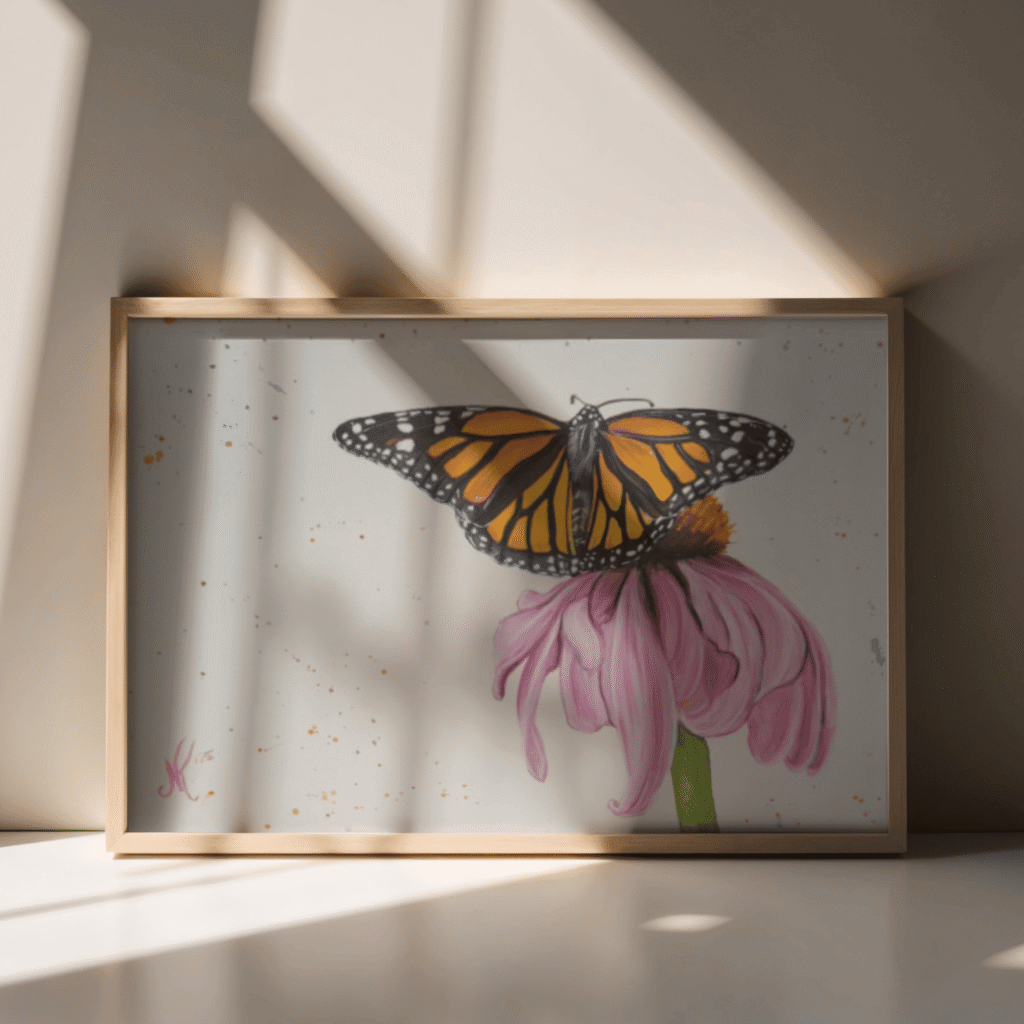
10% of all profits support wildlife and habitat conservation efforts, so every artwork you collect helps protect the planet.

Monarch Butterfly Factsheet
Would you like a Monarch Butterfly fact sheet?
- Sign up for our newsletter for exclusive updates and wildlife conservation tips (Your welcome email has your Password for the Portal)
- Visit https://artsefact.com/factsheets/ where you can access and download ALL Factsheets & Gain Early Access to NEW Factsheets
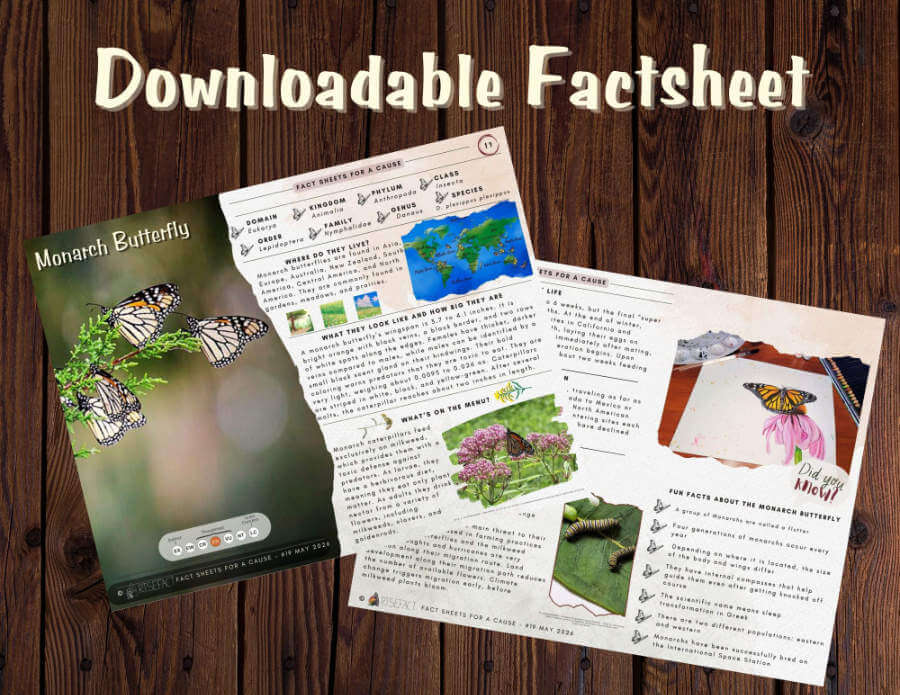
Here’s how you can gain access:
Resources
- ActiveWild – https://www.activewild.com/texas-butterflies/#Monarch
- National Geographic Kids – https://kids.nationalgeographic.com/animals/invertebrates/facts/monarch-butterfly
- IUCN Redlist – https://www.iucnredlist.org/species/159971/219149911
- Britannica – https://www.britannica.com/animal/monarch-butterfly
- PBS News – https://www.pbs.org/newshour/show/scientists-use-new-technology-to-track-individual-monarch-butterfly-migrations
- PBS Nature – https://www.pbs.org/wnet/nature/blog/monarch-butterfly-fact-sheet/
- WWF – https://www.worldwildlife.org/species/monarch-butterfly/
- Monarch Joint Venture – https://monarchjointventure.org/monarch-biology
- National Wildlife Federation – https://www.nwf.org/Educational-Resources/Wildlife-Guide/Invertebrates/Monarch-Butterfly
- Xerxes Society – https://xerces.org/blog/keep-monarchs-wild


.jpg)
