

Where Curiosity Led…
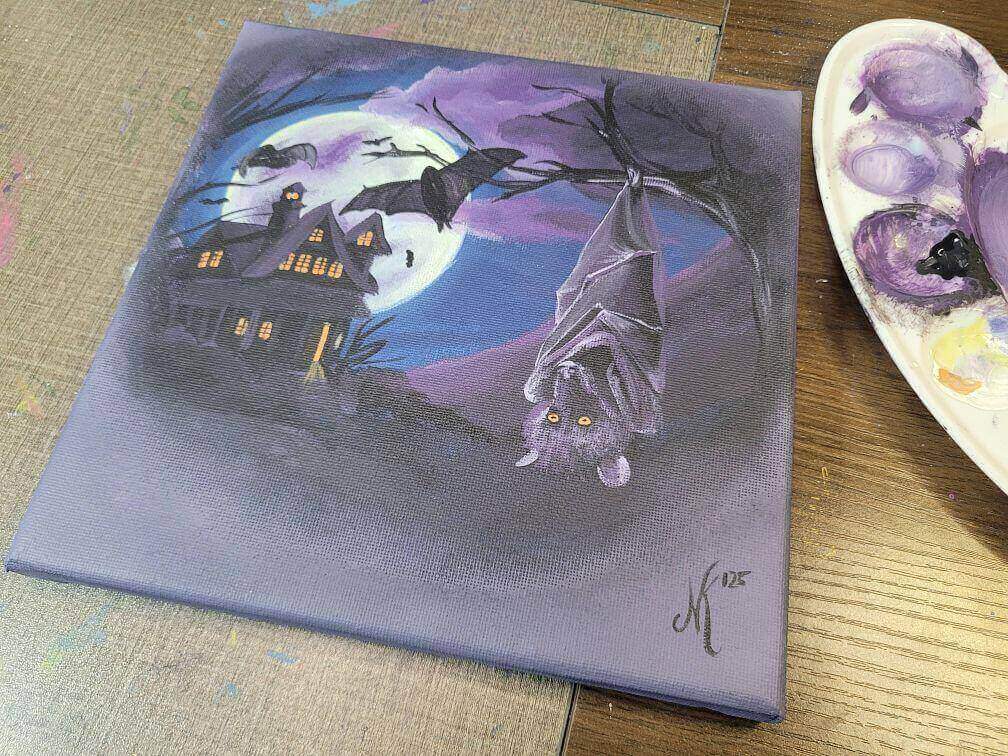
Sometimes curiosity starts with a question. Other times, it starts with wanting to paint something spooky for Halloween!
That’s exactly how I stumbled across the adorable Livingstone’s fruit bat. I was looking for inspiration for a Halloween-themed painting when these fluffy flying foxes caught my eye. Granted, they prefer fruit over blood, but with those almost hypnotizing eyes and that enormous wingspan, how could I possibly resist?
And really, who can fault me for adding a spooky villa in the background? It is Halloween, after all!
What started as a fun, slightly eerie painting idea turned into an opportunity to learn about one of the world’s rarest bats, the challenges they face, and the people working to protect them.
Funny where a little artistic curiosity can lead you, isn’t it?
Meet the Livingstone’s Fruit Bat
When you think of Halloween, what comes to mind? Ghosts, vampires, witches… and, of course, bats! But did you know that one of the world’s rarest bats looks more like a flying puppy than a creature of the night?
Meet Livingstone’s fruit bat, a magnificent flying fox with a wingspan reaching nearly five feet, a foxlike face, and absolutely no interest in drinking your blood. Found on just two tiny islands in the Indian Ocean, these gentle fruit eaters are among the world’s most endangered bats.
And while their Halloween reputation might be a little spooky, their real story is far more fascinating. From their unusual treetop homes to their important role in island ecosystems, there’s plenty to discover about these remarkable sky puppies.
So grab your Halloween candy, get comfortable, and let’s meet the real bat behind the spooky silhouette!
Scientific Name: Pteropus livingstonii
Phylum: Chordata
Order: Chiroptera
Genus: Pteropus
Kingdom: Animalia
Class: Mammalia
Family: Pteropodidae
Species: P. livingstonii
IUCN Redlist Status:
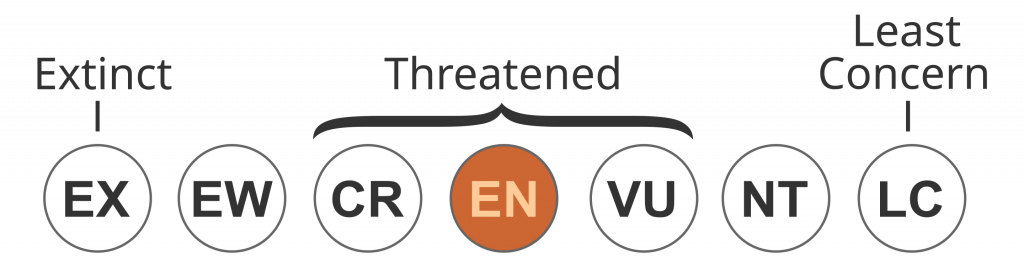
In its most recent assessment, the Livingstone’s Fruit Bat is listed as Endangered on the IUCN Red List, an improvement from its previous status. A 2024 study estimated that approximately 1,500–1,900 individuals remain in the wild (1,200-1,500 bats on Anjouan and 300-400 bats on Mohéli), with populations remaining mostly stable in recent years. However, this change in conservation status reflects improved scientific knowledge rather than a significant population recovery. With so few bats remaining and their forest habitat still disappearing, the species continues to face a serious risk of extinction.
- Where Curiosity Led…
- Meet the Livingstone's Fruit Bat
- Where do they fly?
- A Misjudged Appearance
- Foragers not bloodsuckers
- Life in the trees
- A Halloween Icon
- Close to Home
- Close to Home
- Bat Champions
- Livingstone's Fruit Bat Fun Facts
- Threats
- Conservation Wins
- How You Can Help Protect the Livingstone's Fruit Bat
- Buy Art & Save Wildlife
- Livingstone's Fruitbat Factsheet
- Resources
- Shop Bestsellers
Where do they fly?
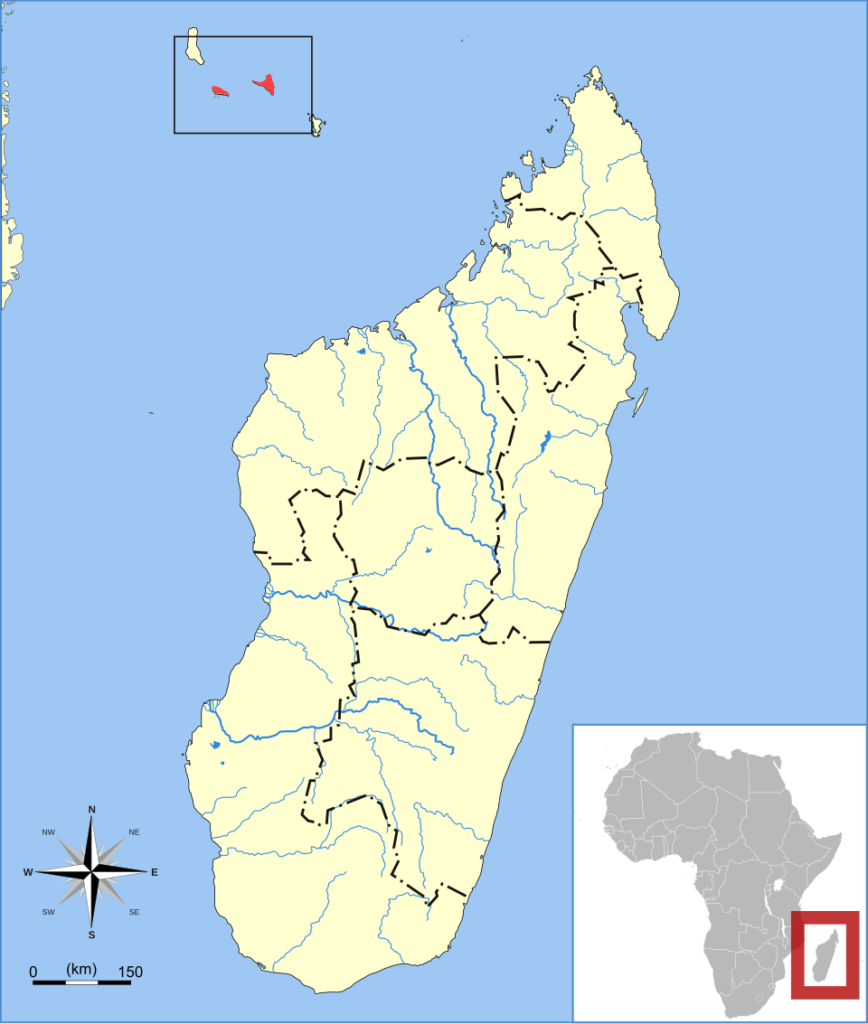
Livingstone’s fruit bats are only found in Moheli and Anjouan in the Comoros, two volcanic islands in the Comoros archipelago, nestled in the Indian Ocean between Madagascar and mainland Africa.
A Room with a View (and Plenty of Shade)
Livingstone’s fruit bats are rather picky about their resting spots. They prefer to live in tall native trees facing southeast on steep slopes near permanent water sources.
And a study assumes there’s a good reason for their particular taste in real estate!
These slopes receive morning sunlight but offer protection from the intense midday sun, suggesting that the bats may be sensitive to temperature. Sheltered valleys also help shield the bats from strong winds. For an animal spending much of its resting time hanging exposed in the treetops, a little natural protection goes a long way.
A Misjudged Appearance
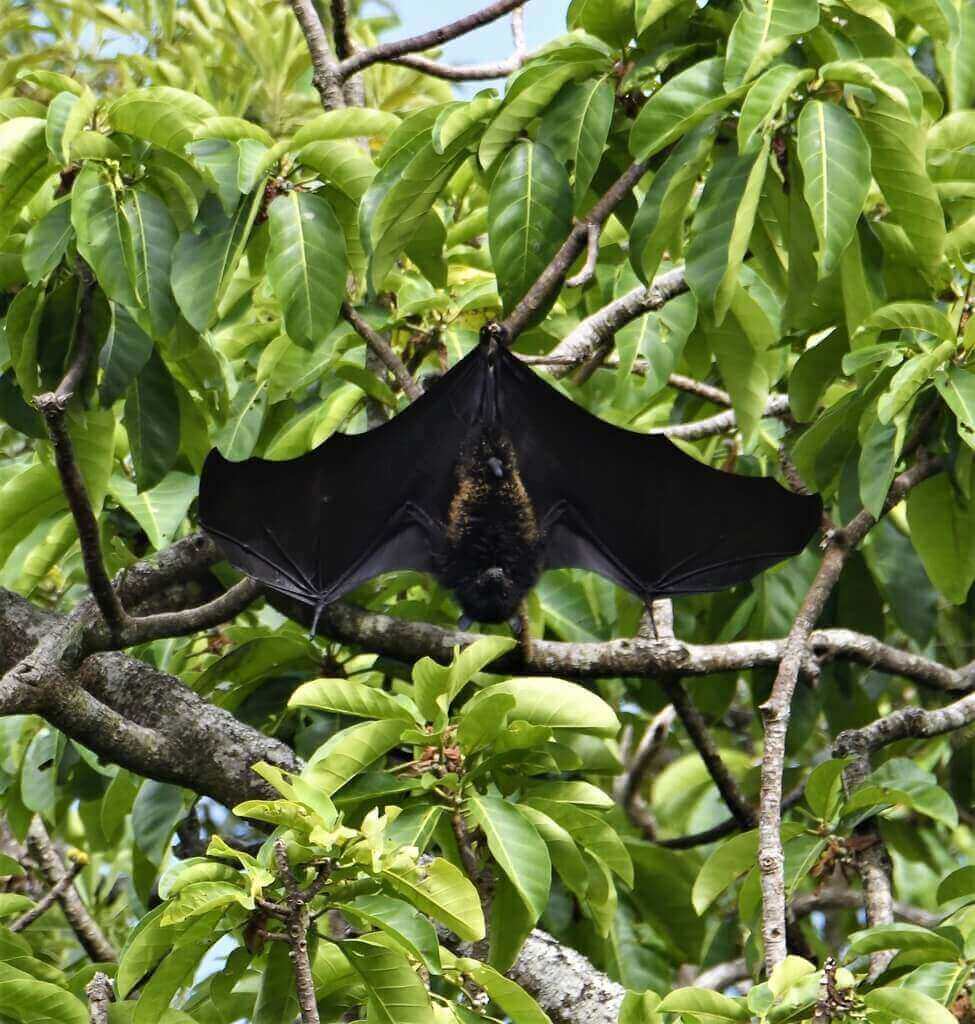
Forget the tiny, spooky bats you see in Halloween decorations! Livingstone’s Fruit Bats are quite literally “megabats”. These bats are about 12 inches tall, roughly the size of a ruler, and have an impressive wingspan of 5 feet!
Yes, you read that right, FIVE FEET, not inches! That’s taller than many people! Can you imagine one spreading its wings and you disappearing behind them? Oof!
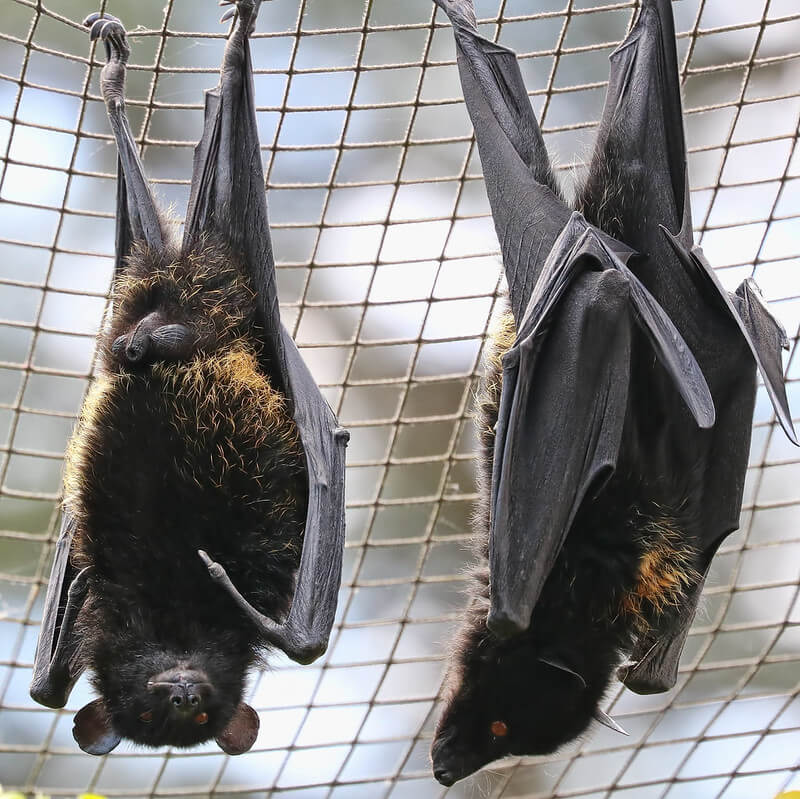
Their fur is fluffy, mostly black or dark brown, sometimes with golden sprinkles along their flanks, rumps, and bellies. Now add rounded ears and striking orange, copper, or reddish eyes, and you’ve got yourself a cute, albeit somewhat spooky, Halloween puppy rather than a monster!
Why Are They Called Flying Foxes?
The name flying fox comes from their foxlike faces, with relatively long snouts, large eyes, and prominent ears.
Not So Blind After All!
Ever heard the expression “blind as a bat”? Well, Livingstone’s fruit bats would probably disagree!
Unlike many smaller bats that use echolocation to navigate and hunt, flying foxes rely primarily on their well-developed eyesight and sense of smell.
Their large eyes help them navigate in low light, while their noses help them locate food, including ripe fruit and flowering trees.
So not only are these bats far from blind, but they also have an impressive set of senses to help them find their way around their island home.
Foragers not bloodsuckers
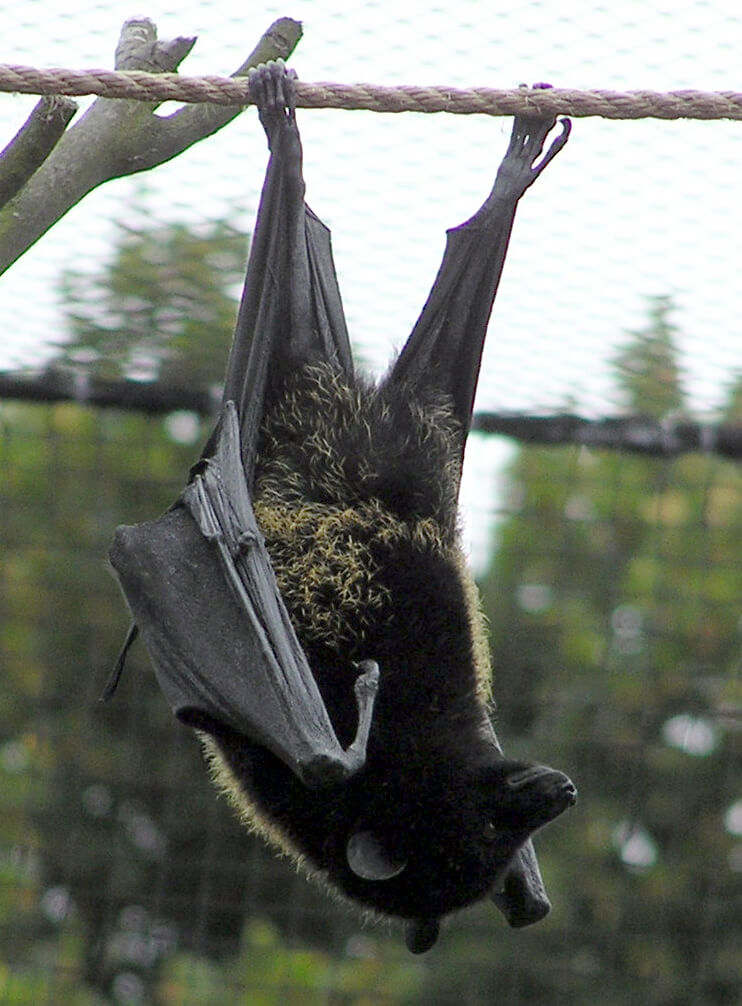
Livingstone’s fruit bats don’t drink blood. Despite their somewhat intimidating looks, they’d much rather enjoy a delicious piece of fruit, as their name might give away.
While these flying foxes primarily feed on fruit, their menu also includes flowers, nectar, pollen, and leaves. Figs are particularly important, especially during the dry season when food becomes harder to find.
And here’s a fun little twist: while kapok trees are among their favorite feeding spots, it’s actually the flowers and nectar they’re especially fond of, rather than the fruit!
A Seasonal Menu
Just like us, Livingstone’s fruit bats don’t necessarily eat the same things all year round. Although, unlike us, they can’t exactly pop into a greenhouse and grow whatever they’re craving!
During the rainy season, when more trees are producing fruit and flowers, they can enjoy a wider variety of foods. But during the dry season, their choices become more limited, making certain fig trees quite valuable.
With their excellent eyesight and sense of smell, they search for fruiting and flowering trees, and often feed high in the forest canopy.
And apparently, they’re not always willing to share their favorite dining spots! Livingstone’s fruit bats have been observed defending valuable feeding areas from other bats, using vocalizations, wing movements, and even chasing away unwelcome dinner guests.
The Rainforest’s Flying Gardeners
This may come as a surprise, but these bats do more than enjoy a good meal. Their feeding habits can also benefit the forests they call home.
When fruit bats eat fruit, they can carry seeds away from the parent tree, thus helping plants spread into new areas. And when they visit flowers for nectar or pollen, they can transfer pollen between blossoms.
Think of them as flying gardeners, helping forests grow and regenerate, one meal at a time!
These ecological roles are well documented among flying foxes, although scientists are still learning exactly how much Livingstone’s fruit bats contribute to seed dispersal and pollination in the Comoros.
And that’s one more reason their survival matters. Protecting these remarkable bats also means protecting the relationships between animals and plants that help keep island ecosystems healthy.
Life in the trees
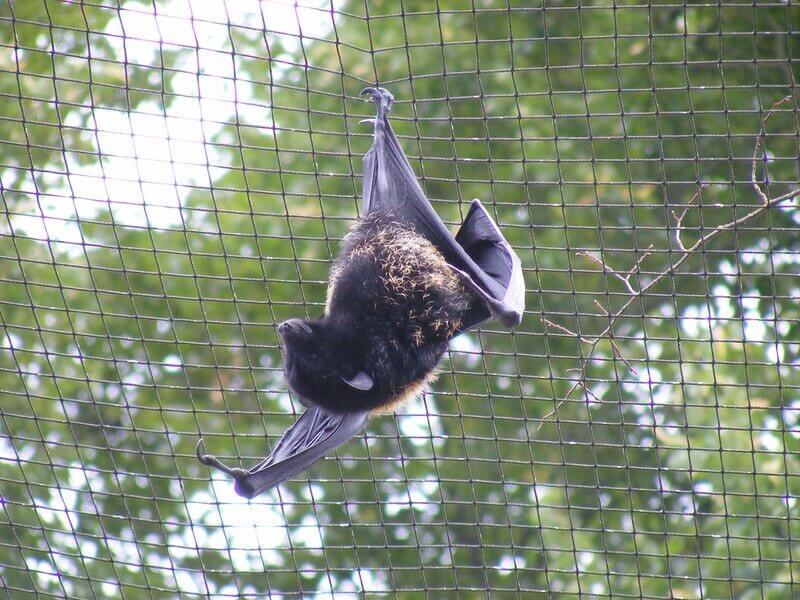
Imagine spending much of your life hanging upside down from a tree, surrounded by neighbors who chatter, squabble, and occasionally invade your personal space. Welcome to the world of Livingstone’s fruit bats!
These flying foxes are social animals that gather in treetop roosts. Although males may establish territories and associate with several females, their social lives are more complicated than a simple one-male, eight-female arrangement.
And while hanging upside down might seem uncomfortable to us, for bats, it’s simply a normal way to rest!
Not Exactly Night Owls!
You might expect a bat to spend its days sleeping and its nights flying around in search of food. And while Livingstone’s fruit bats certainly are active at night, researchers have discovered that they aren’t quite as committed to the night shift as you might think!
Scientists fitted 17 Livingstone’s fruit bats with GPS trackers and studied their movements between 2022 and 2023. Surprisingly, the tagged bats traveled similar distances during daylight and nighttime hours.
Why? Researchers suspect that the relative lack of predators, combined with the challenge of finding enough food in a heavily altered landscape, might help explain their unusual daytime activity.
Now, granted, 17 is not the largest number, and there’s still a lot more research to be done, but for now… So much for the idea that all bats disappear when the sun comes up!
A Complicated Social Life
Livingstone’s fruit bats aren’t exactly loners. They form social groups, communicate through vocalizations, and interact with one another in ways that aren’t always peaceful.
Researchers studying 50 Livingstone’s fruit bats at Jersey Zoo discovered a surprisingly complex social network. Some individuals regularly associated with particular companions, while others had more aggressive interactions.
Age and social dominance also influenced their relationships.
In other words, there’s a lot more going on in those treetops than a bunch of bats hanging around!
It’s worth remembering that these observations came from bats living in captivity, where social arrangements may differ from those in the wild.
Raising the Next Generation
Livingstone’s fruit bats, unfortunately, reproduce slowly. Females generally give birth to a single pup, with births in the wild associated with the seasonal reproductive cycle.
Like other flying foxes, newborn pups depend on their mothers for milk, warmth, and protection. As they grow, they gradually become more independent and learn to fly and forage.
And because females typically produce only one pup at a time, replacing individuals lost from the wild isn’t a quick process.
For a species with such a small population, every new generation matters.
A Halloween Icon
When people think of animals associated with Halloween, bats are one of the first answers that come to mind. Whether they’re hanging from your porch, decorating your candy bowl, or flying across the screen in a spooky movie, bats have become practically inseparable from the holiday.
But have you ever wondered how these fascinating flying mammals ended up with such a frightening reputation?
From Bonfires to Bats
Bats go back far in Halloween history, including its Pagan ancestor, Samhain, a seasonal festival that was celebrated in parts of ancient Celtic Europe. Bonfires were an important part of the tradition, and their light and warmth could attract bugs, which hungry insect-eating bats may have seen as an opportunity for a big buffet.
Imagine standing around a bonfire on a chilly autumn evening, telling stories about spirits and the supernatural, when dark, winged creatures suddenly swoop overhead. It’s not difficult to see how bats could become part of the spooky atmosphere!
Although the precise origins of this association are difficult to establish, bats eventually became firmly connected with nighttime mysteries, witches, and Halloween imagery.
Dracula Has Some Explaining to Do!
If there’s one character who really helped give bats their bloodthirsty reputation, it’s Count Dracula.
In Bram Stoker’s 1897 novel Dracula, the vampire is associated with bats and can take the form of one. Later films, books, and Halloween decorations helped cement the connection between vampires and these otherwise rather innocent animals.
But here’s the funny thing: out of more than 1,400 recognized bat species, only three species of vampire bats feed on blood!
All three live in the Americas, far away from Livingstone’s fruit bats in the Comoros. And here’s the funny thing: Dracula’s famous castle is located in Transylvania, Romania! Now, that’s quite the commute to the Americas!
Vampire bats generally feed on other animals, such as livestock or birds, although some vampire bats can also bite humans.
And they aren’t the blood-guzzling monsters Hollywood would have you believe. They make small wounds and lap up blood rather than sucking it out with fangs.
Livingstone’s fruit bats, meanwhile, would probably prefer you handed them a fig.
The Real Bat Behind the Halloween Decorations
Despite their spooky reputation, bats are incredibly diverse. Some hunt insects, others catch fish, some feed on nectar, and many flying foxes, including Livingstone’s fruit bats, feast primarily on fruit and other plant material.
And while we might associate them with darkness, danger, and haunted houses, bats play important roles in ecosystems around the world.
So perhaps it’s time to give our Halloween mascots a little more credit!
After all, with those enormous wings, hypnotizing eyes, and fluffy faces, Livingstone’s fruit bats are perfectly capable of looking mysterious without being monsters.
And if one happens to look like it belongs in front of a spooky villa in a Halloween painting… well, who am I to argue?
Close to Home
Close to Home
Livingstone’s fruit bats might live thousands of miles away on two small islands in the Indian Ocean, but you don’t have to travel nearly that far to discover some incredible bats!
Texas is home to more than 30 bat species, including the Mexican free-tailed bat (Tadarida brasiliensis). While these little guys can’t compete with Livingstone’s fruit bat’s enormous wingspan, they certainly make up for it in numbers!
Just outside San Antonio, Bracken Cave hosts one of the world’s largest known bat colonies, with an estimated 15 million Mexican free-tailed bats gathering during the summer maternity season. Imagine millions of tiny wings swirling into the evening sky. Now that’s a Halloween spectacle!
And you don’t even have to leave Houston! The Waugh Drive Bridge over Buffalo Bayou is home to a colony of Mexican free-tailed bats that visitors can sometimes watch emerging around sunset.
Unlike their fruit-loving cousins in the Comoros, these Texas bats feast on insects, helping keep insect populations in check.
Whether they’re giant flying foxes or tiny insect hunters, bats are fascinating animals worth appreciating—and protecting!
Bat Champions
Let’s face it: bats could really use a better PR team!
Between vampire stories, Halloween horror movies, and misconceptions about rabies, these fascinating animals have earned a reputation they don’t deserve. Luckily, some dedicated organizations are working hard to change that!
Lubee Bat Conservancy focuses on bat conservation, research, and education, including caring for endangered fruit bats and participating in conservation breeding programs.
Bat Conservation International works to protect bats and their habitats around the world through research, conservation projects, and public education.
And Bat World Sanctuary provides lifelong care for bats that cannot be released into the wild while helping people better understand these often-misjudged animals.
Each organization approaches bat conservation a little differently, but they share an important goal: helping people see bats as the remarkable animals they truly are.
Because sometimes, changing the world for wildlife starts with changing a few minds!
Livingstone’s Fruit Bat Fun Facts
- Island giant! The Livingstone’s fruit bat is the largest bat native to the Comoros and one of the world’s rarest flying foxes.
- Flying without flapping? These impressive bats can use rising currents of warm air, called thermals, to soar and conserve energy. Who needs to flap constantly when the wind can lend a wing?
- A cloud of bats! A group of bats is sometimes called a cloud. With those enormous wings, that’s one cloud you probably wouldn’t want blocking out the sun!
- A drink on the fly! Flying foxes have been observed drinking water while flying, skimming close to the surface rather than stopping for a sip.
- Built for hanging around! Like other bats, Livingstone’s fruit bats have specialized feet that allow them to hang upside down with very little muscular effort. Talk about taking relaxation seriously!
Threats
The most dangerous threat to Livingstone’s Fruit Bats is the destruction of the forests they call home. On Anjouan and Mohéli, forests have been cleared or degraded by agricultural expansion, timber harvesting, and demand for firewood.
And these bats aren’t just looking for any old tree! They depend on suitable roosting sites and a network of fruiting and flowering trees for food.
As forests become smaller and more fragmented, finding safe places to rest and enough food becomes increasingly difficult.
Living on just two small islands comes with another challenge: there’s nowhere else for these bats to go.
The Comoros are vulnerable to powerful tropical cyclones, which can damage roosting trees and destroy important feeding habitat. Climate change may increase some of these risks, although its effects on individual storms are complex.
And when a species has such a small population and limited range, a single severe event can have an outsized impact.
Combine that with their slow reproductive rate, and you can see why protecting the remaining population is so important.
Fortunately, there are people working hard to give these magnificent flying foxes a fighting chance!
Conservation Wins
Here’s some good news: Livingstone’s fruit bats have some pretty dedicated humans looking out for them!
Organizations like Dahari and Bat Conservation International are working alongside local communities in the Comoros to protect these remarkable flying foxes and the forests they depend on.
Protecting Bats AND Helping People
One particularly promising approach involves working directly with landowners to protect important bat roosts.
Rather than simply telling people they can’t use their land, Dahari has developed conservation agreements that encourage landowners to protect important trees and habitat while receiving agricultural support.
By 2025, seven such agreements were helping protect roosting sites used by approximately one-third of the global population.
That’s conservation that benefits both wildlife and the people sharing its home!
A Safety Net for the Species
Conservation efforts aren’t limited to the Comoros.
A managed breeding program involving zoos, including Jersey Zoo and Northumberland Zoo, helps maintain a population of Livingstone’s fruit bats under human care.
These programs support research, education, and the long-term conservation of the species. They also provide opportunities to study the bats’ behavior and biology, helping scientists better understand their needs.
How You Can Help Protect the Livingstone’s Fruit Bat
- Donate to Dahari and Bat Conservation International
- Destigmatize harmful myths about bats
- Support responsible wildlife policies, value living history
- Learn more about Livingstone’s Fruit Bats by watching Northumberland Zoo’s YouTube channel, live animal cams, and watching webinars on the Bat Conservation International YouTube channel (psst! this is a great way for them to get money without you having to donate)
- Lastly, Shop with purpose: Purchases from Artsefact help support wildlife and habitat conservation.
Buy Art & Save Wildlife
10% of all profits support wildlife and habitat conservation efforts, so every artwork you collect helps protect the planet.
Livingstone’s Fruitbat Factsheet
Would you like a Livingstone’s Fruitbat fact sheet?
- Sign up for our newsletter for exclusive updates and wildlife conservation tips (Your welcome email has your Password for the Portal)
- Visit https://artsefact.com/factsheets/ where you can access and download ALL Factsheets & Gain Early Access to NEW Factsheets.
Here’s how you can gain access:
Resources
- Animalia – https://animalia.bio/livingstones-fruit-bat
- IUCN Red List – https://www.iucnredlist.org/species/18732/276948980
- Bat Conservation International – https://www.batcon.org/bat/pteropus-livingstonii-2/ and https://www.batcon.org/our-work/inspire-through-experience/
- Northumberland Zoo – https://www.northumberlandzoo.co.uk/livingstonesfruitbats
- Surrey Wildlife Trust – https://www.surreywildlifetrust.org/blog/ashley-greening/why-are-bats-associated-halloween
- Houston Parks Board – https://houstonparksboard.org/bats-along-the-bayou-greenways/
- Texas Parks and Wildlife – https://tpwd.texas.gov/huntwild/wild/species/bats/bat-watching-sites/
- Lubee Bat Conservatory – https://www.lubee.org/post/welcome-to-bat-tales
- Bat World Sanctuary – https://batworld.org/about-us/
- Science Direct – https://www.sciencedirect.com/science/article/abs/pii/S0006320702000939
- Dahari comores annual report – https://daharicomores.org/wp-content/uploads/2026/03/Annual_Report_Dahari_2025.pdf
- U.S. Fish and Wildlife – https://www.fws.gov/species/mariana-fruit-bat-pteropus-mariannus-mariannus
- https://pmc.ncbi.nlm.nih.gov/articles/PMC4513465/
- https://www.frontiersin.org/journals/ecology-and-evolution/articles/10.3389/fevo.2021.641411/full
- Society for Conservation Biology – https://conbio.onlinelibrary.wiley.com/doi/10.1111/csp2.70208
- Dahari – https://daharicomores.org/en/the-results-of-our-study-on-livingstones-fruit-bats-with-gps-tags/
Shop Bestsellers
No products found.


